
Last updated September 22, 2026
Level 1 sweep and inspection to the NFPA 211 annual standard - flue, crown, cap, and flashing checked and photographed
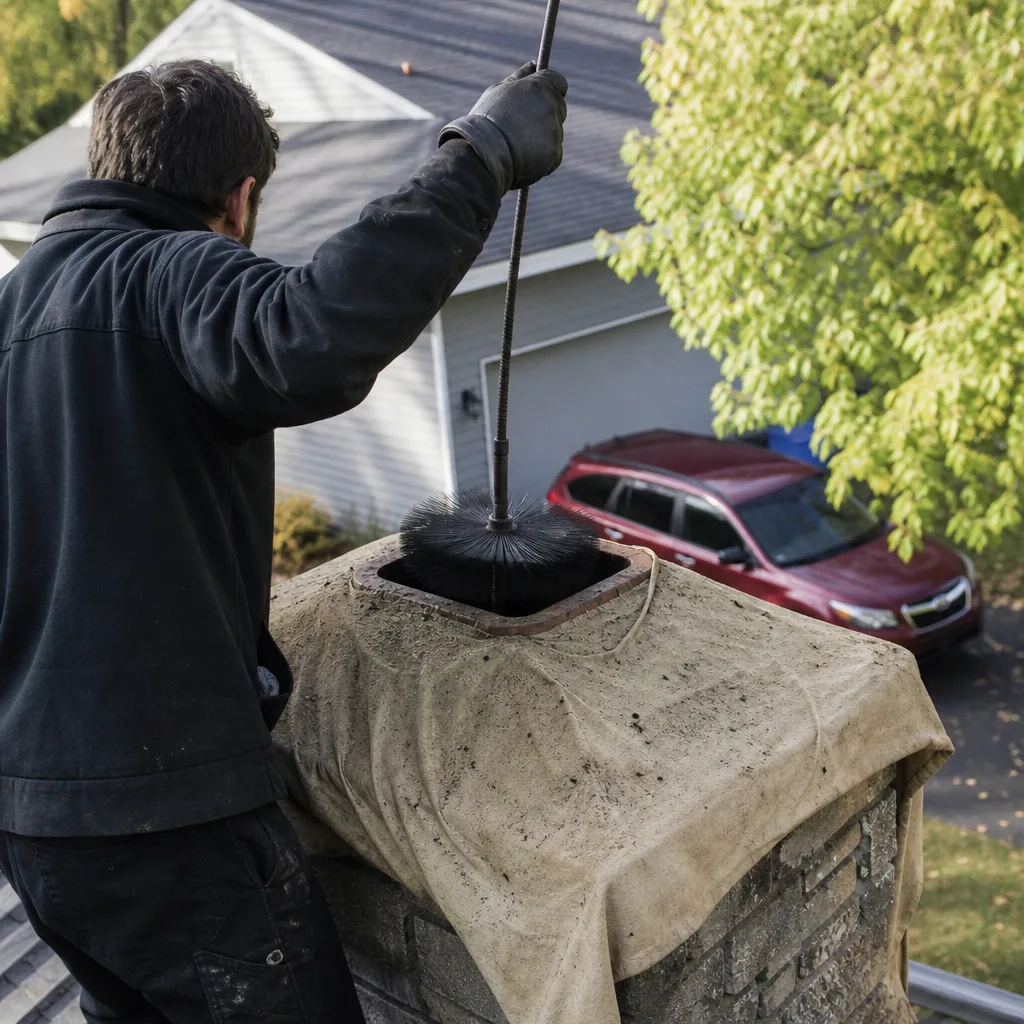
Chimney sweep logs do not sweep chimneys. They loosen some creosote - which then falls where a brush and vacuum still have to collect it.
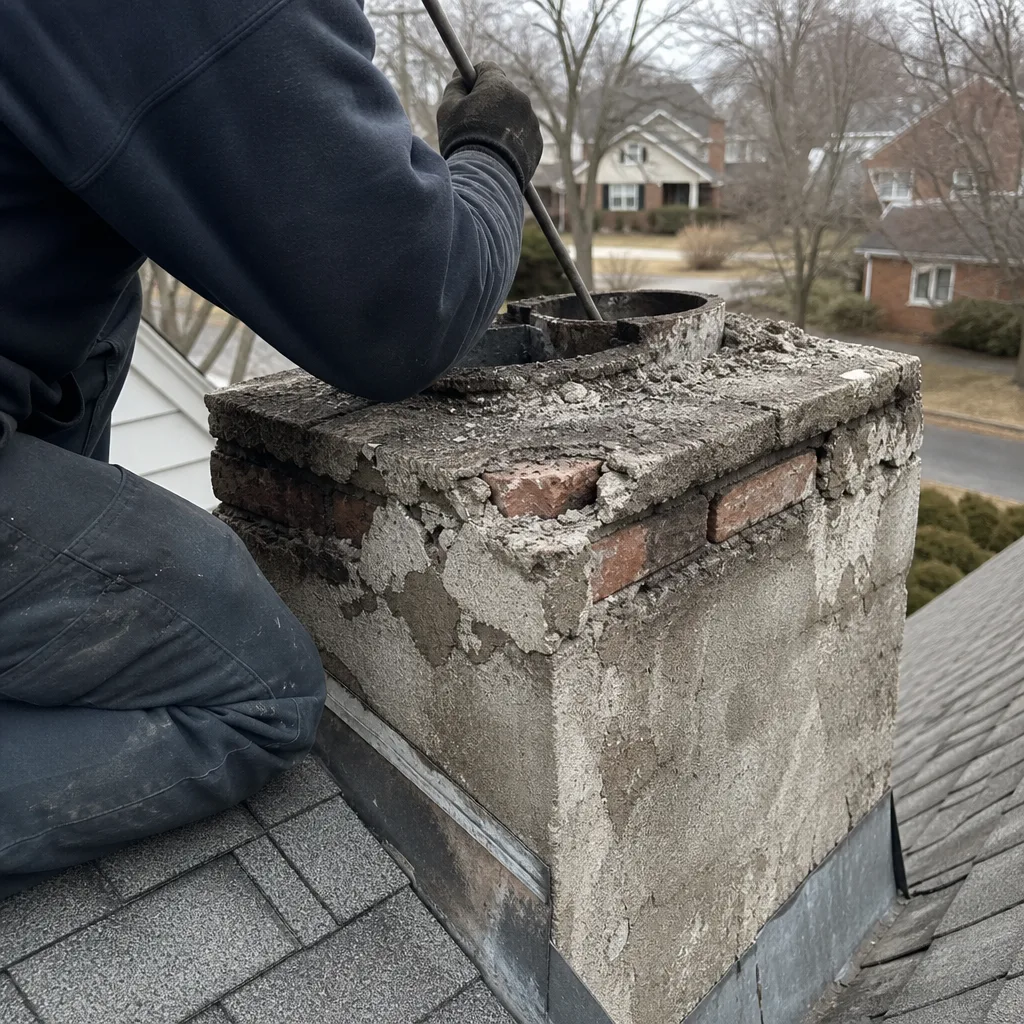 Before
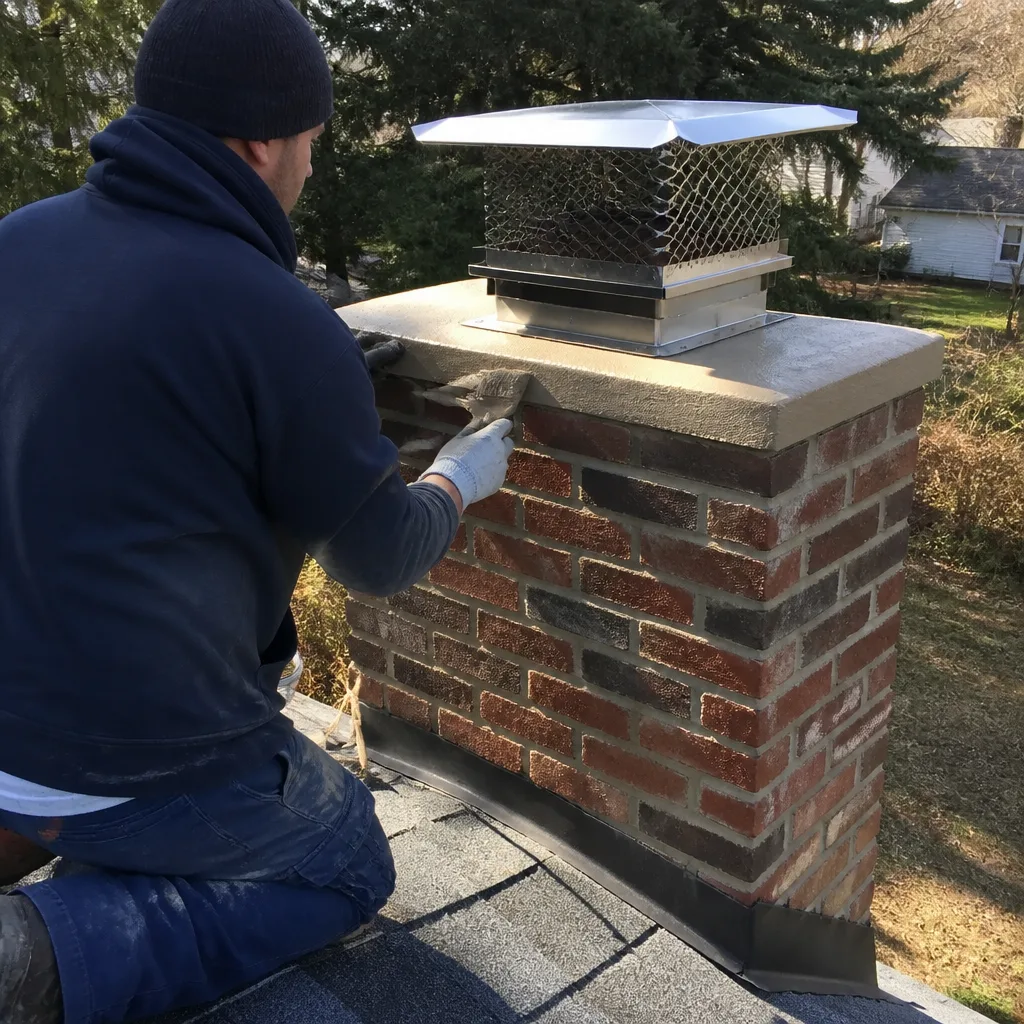 After
After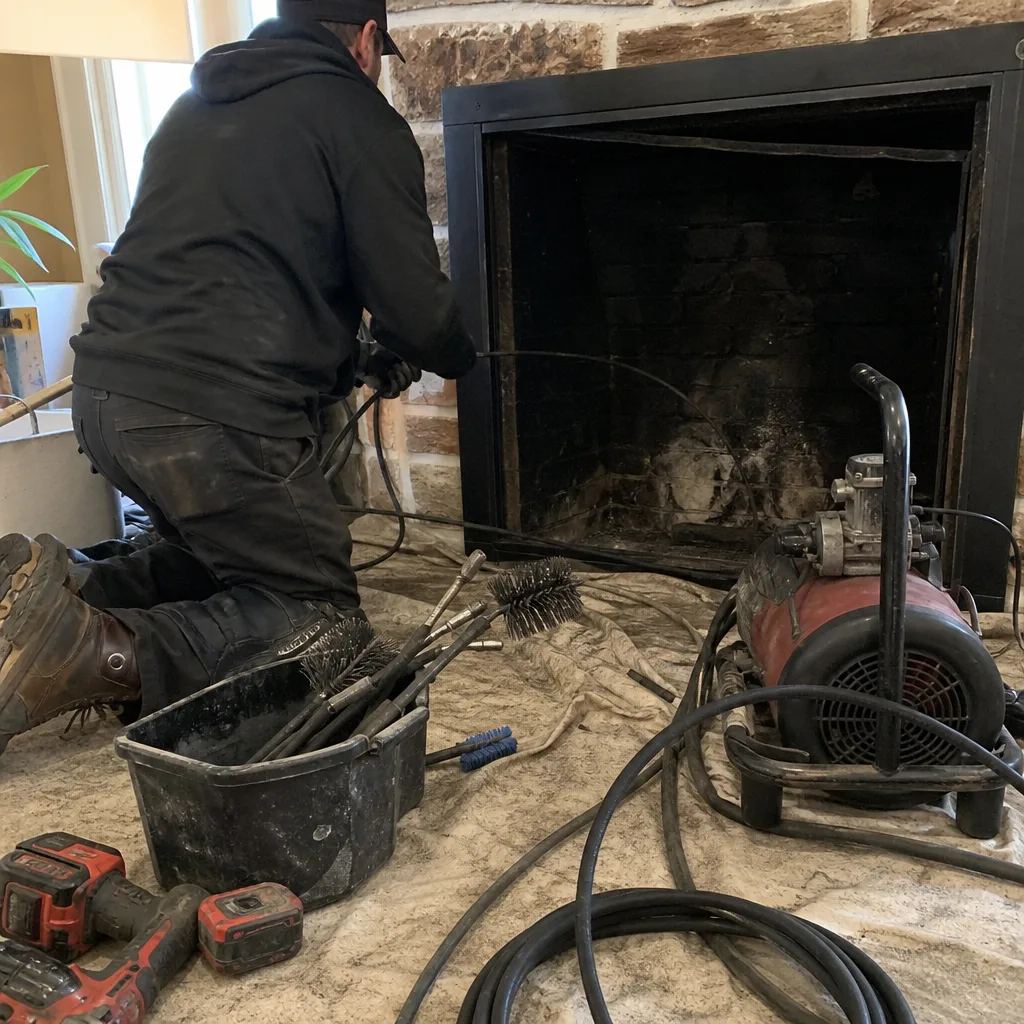 Before
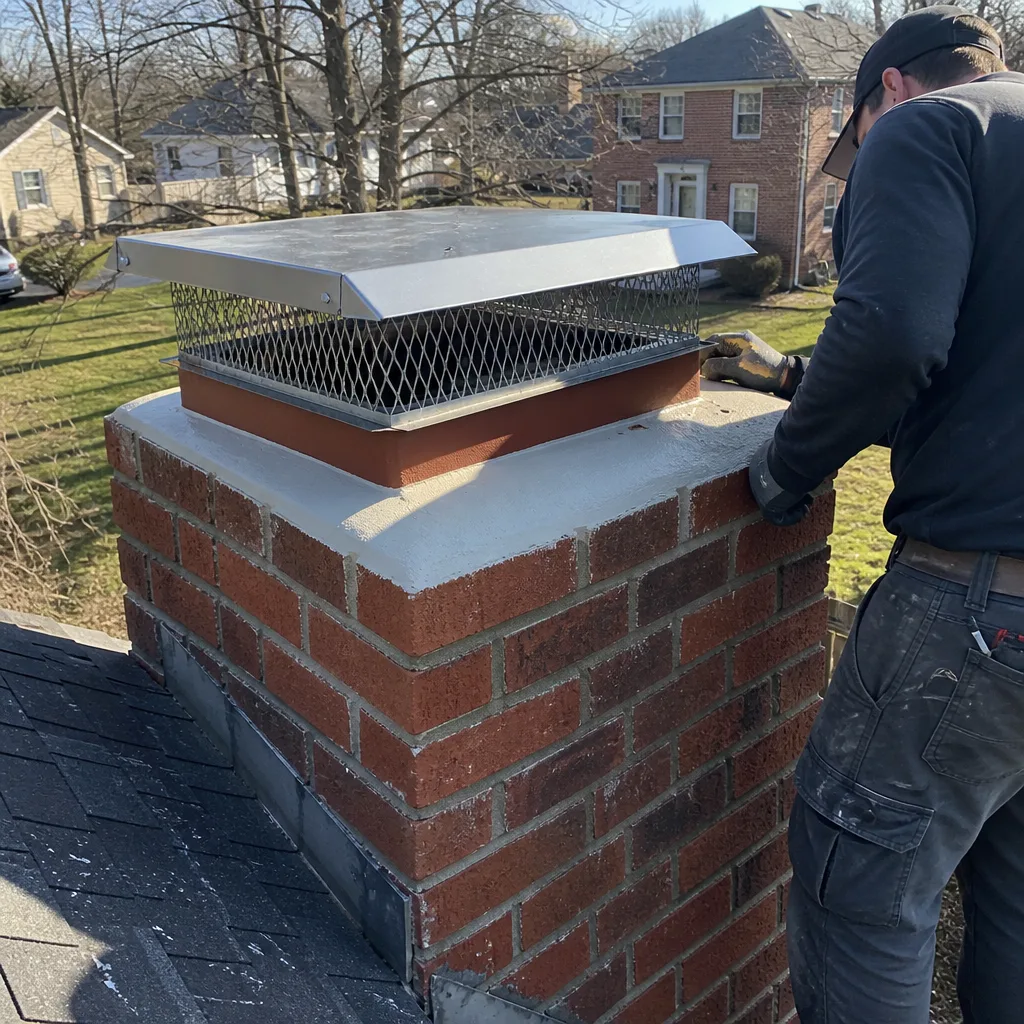 After
After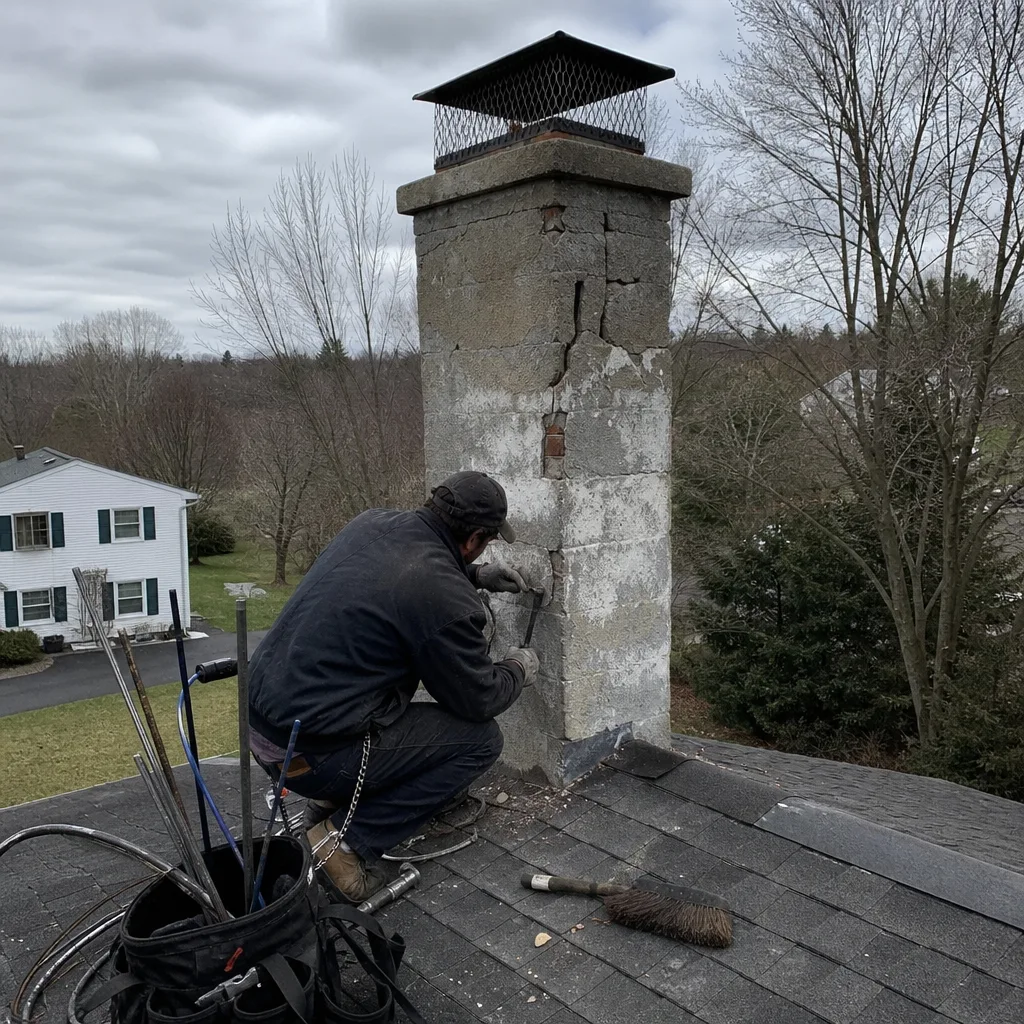 Before
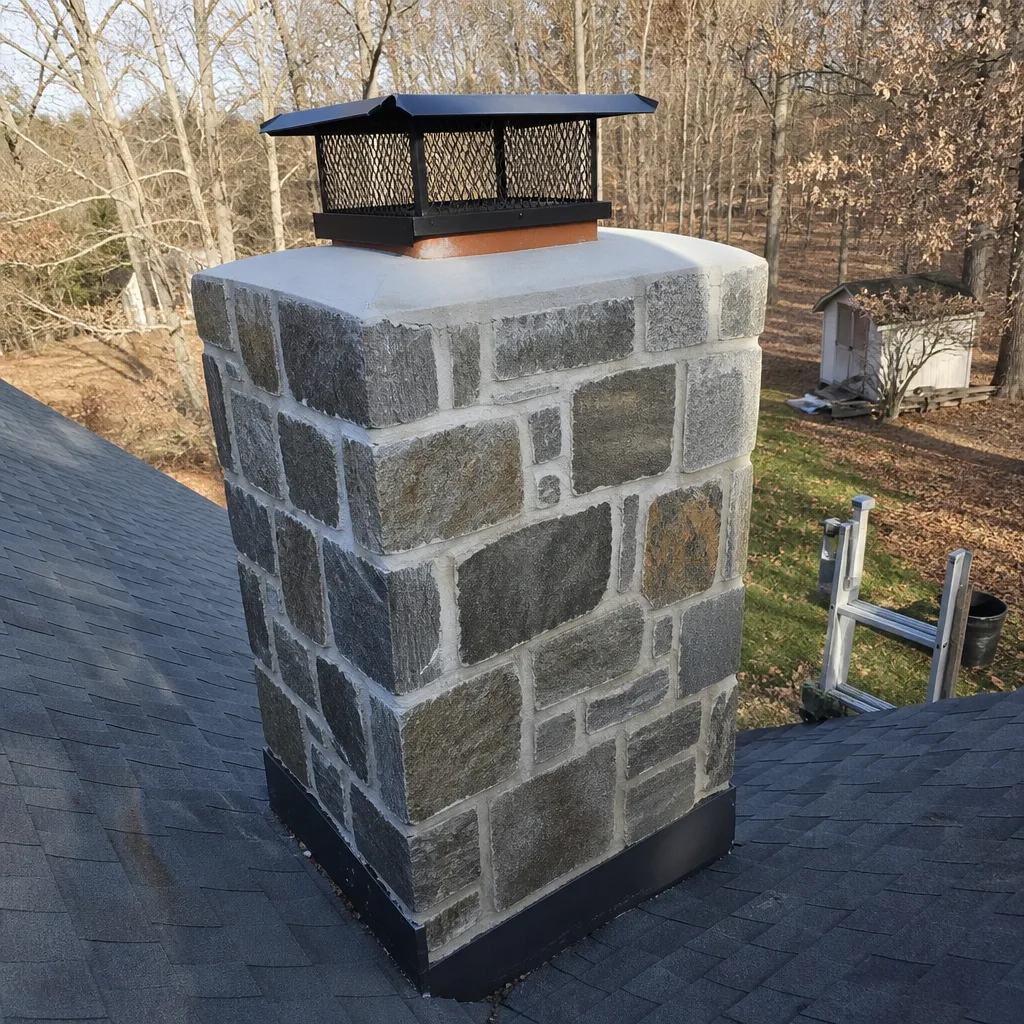 After
AfterChimney Cleaning Warning Signs: A West Chester Homeowner’s Reference Guide
Here’s the counterintuitive truth most chimney guides won’t tell you: the most dangerous warning sign isn’t smoke backing into your living room or a cracked brick you can spot from the driveway. It’s a draft that draws too aggressively. In older West Chester homes with tall, unlined flues, excessive draft velocity can pull combustion gases through the firebox so fast that incomplete combustion residue, carbon monoxide included, doesn’t fully exhaust and instead migrates into living spaces through microscopic gaps in the smoke chamber or thimble. You won’t smell it. You won’t see it. This guide teaches you to sort every other warning sign into three actionable tiers, document what you find, and know exactly when to pick up the phone-though for a deeper dive, see The Complete Guide to Chimney Cleaning in West Chester.
Quick Answer
Most chimney warning signs fall into three categories: document-and-monitor (minor staining, faint offseason odors), schedule-within-30-days (visible creosote buildup, minor spalling, draft irregularities), and do-not-use-until-inspected (cracked flue tiles, smoke infiltration, carbon monoxide detector activation). The five visible-from-the-firebox signs are ash residue patterns, liner tile condition, smoke chamber staining, damper corrosion, and hearth discoloration. Each indicates something specific, and none tells the full story without a camera inspection.
Table of Contents
- The Three-Tier Triage Framework
- Five Warning Signs Visible From the Firebox
- West Chester’s Older Housing Stock: Hidden Deterioration
- The Seasonal Odor Guide: What Chimney Smells Actually Mean
- How to Document a Warning Sign Before You Call
- What It Costs to Address Warning Signs in West Chester
- Common Mistakes to Avoid
- When to Call a Professional
- Frequently Asked Questions
- The Bottom Line
 Before
 After
AfterThe Three-Tier Triage Framework
Every warning sign in this guide gets sorted into one of three tiers. The framework exists because we’ve seen two equally dangerous homeowner responses in West Chester: panic calls about cosmetic issues that don’t need immediate service, and delayed action on conditions that genuinely risk fire or CO exposure. The triage system prevents both.
Tier 1: Document and Monitor
These findings don’t require immediate service, but they establish a baseline that future inspections will compare against. Document with photos and re-evaluate annually.
- Light brown or tan staining on the firebox rear wall - typically indicates past minor condensation events, common in West Chester’s humid shoulder seasons when outdoor dew points exceed indoor flue temperatures.
- Faint musty odor in July or August - usually summer air infiltration through a top-sealing damper that isn’t fully closed, or humidity interacting with residual soot. Not active pyrolysis.
- Minor mortar erosion between firebox bricks - less than one-quarter inch depth, no loose material. Normal thermal cycling wear.
- Small rust flakes on a steel damper frame - surface oxidation only, no structural deformation or binding.
Action: Photograph, note date, compare at next annual inspection. No service needed unless progression is visible year-over-year.
Tier 2: Schedule Within 30 Days
These conditions warrant professional evaluation and likely cleaning or minor repair, but they don’t create immediate hazard if the fireplace remains unused. If you need help choosing a provider, read How to Hire a Chimney Cleaning Contractor in West Chester: A Step-by-Step Guide.
- Visible glazed creosote (shiny, tar-like, black or dark brown) - indicates slow-burning fires or insufficient combustion air. Class II or III creosote, which burns at higher temperatures and adheres more tenaciously than powdery Class I.
- Spalling brick faces on the exterior chimney - freeze-thaw damage from moisture infiltration. In West Chester’s climate, this accelerates after wet winters with rapid temperature swings.
- Draft that varies significantly with wind direction - suggests crown deterioration or missing mortar joints in the flue, allowing pressure differentials to disrupt normal draw.
- Smoke chamber walls with visible corbelled brick stepping and mortar loss - the transition zone above the damper, where many West Chester chimneys built before 1980 were parged with mortar that has since degraded.
Action: Schedule Chimney Cleaning & Sweep in West Chester with camera inspection. Expect written scope and price before work begins.
Tier 3: Do Not Use Until Inspected
These conditions create active hazard. The fireplace or appliance stays off. Carbon monoxide detectors stay active. Call for inspection before next use.
- Cracked or missing flue liner tiles visible from the firebox - gaps in the protective barrier between combustion gases and combustible framing. Even hairline cracks can widen under thermal stress.
- Smoke or combustion odor entering living space during operation - indicates failed containment, whether from liner breach, smoke chamber leakage, or negative pressure conditions.
- Carbon monoxide detector activation near the hearth or in an upstairs bedroom - treat every activation as a chimney system failure until proven otherwise.
- Visible flames or glowing material in the chimney exterior or attic space - active chimney fire or near-fire event. Evacuate, call 911, then call for post-incident inspection.
- Sagging or detached chimney liner - often stainless steel inserts in older clay-lined systems, where corrosion at the top collar allows the liner to drop, creating gaps at joints.
Action: Cease use immediately. Call Level Two Chimney West Chester home for emergency evaluation. We document the condition with camera footage before any repair discussion.
Five Warning Signs Visible From the Firebox
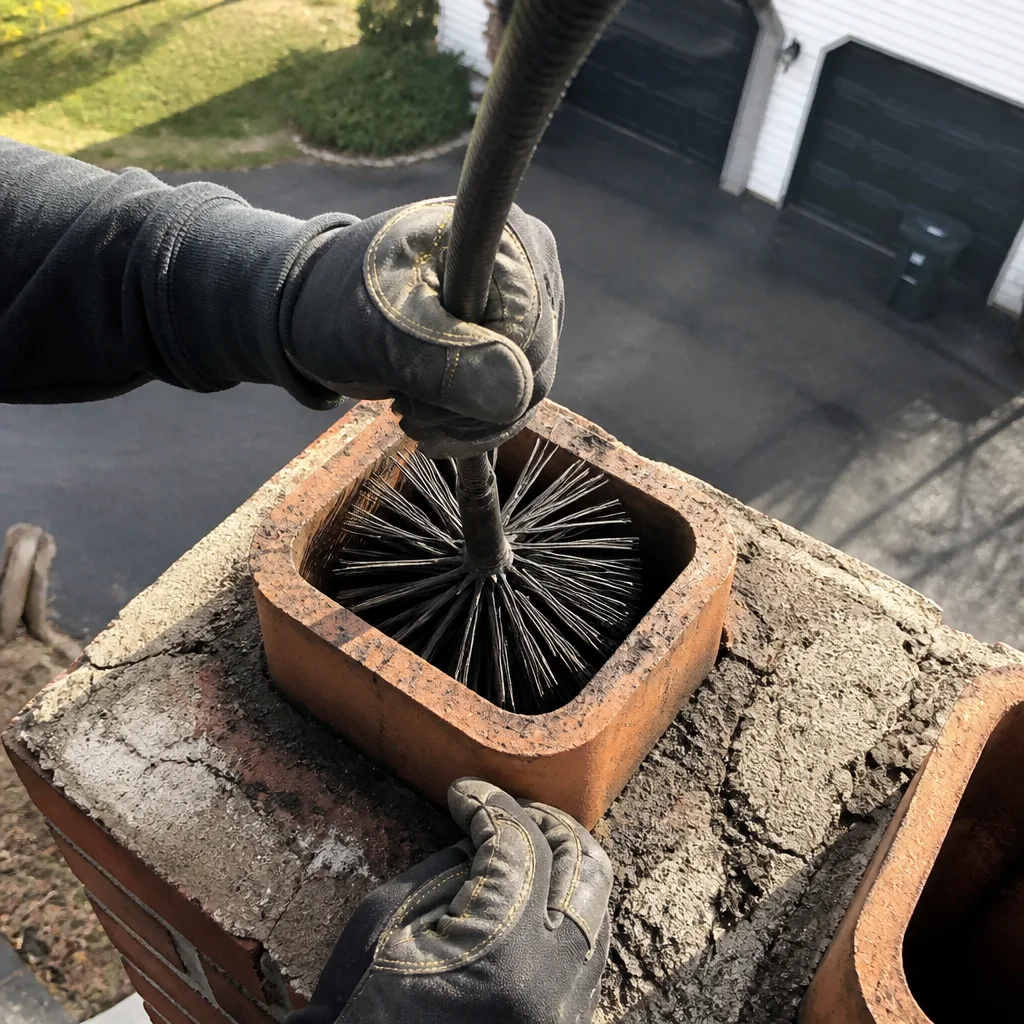
You don’t need a ladder or specialized equipment to perform meaningful preliminary observation. These five signs are visible from the firebox opening with normal household lighting and, in some cases, a flashlight on your phone. What each indicates structurally, and what it cannot tell you without a camera.
1. Ash Residue Patterns
What to look for: Asymmetrical ash accumulation, with heavy deposits on one side of the firebox floor or rear wall.
What it indicates: Uneven combustion airflow, often from a partially blocked flue, damaged throat damper, or construction settling that tilted the firebox. In West Chester’s Glen Mills and Thornbury Township areas, we’ve traced this pattern to shifted firebricks in homes built on expansive clay soils.
What it doesn’t tell you: Whether the blockage is creosote, debris, or structural collapse. Only a camera inspection reveals the location and nature of the obstruction.
2. Liner Tile Condition
What to look for: Use your flashlight to examine the first few feet of flue liner visible above the damper. Look for cracks running through individual tiles, spalled (flaked) tile surfaces, or mortar joints that have fallen out.
What it indicates: Clay tile liners in West Chester homes built before 1990 often show thermal shock cracking, especially if the chimney served a wood stove installed after original construction. A single cracked tile at the flue opening suggests more extensive damage above, where temperature differentials are greatest.
What it doesn’t tell you: The condition of tiles beyond the first 3-4 feet, where most liner failures actually occur. NFPA 211 Level 2 inspection, with camera documentation, is required for full assessment. Clause 4 of the Haven Standard requires this photo record on every job.
3. Smoke Chamber Staining
What to look for: Above the damper, the smoke chamber walls should appear relatively uniform in color. Heavy black staining, especially with a dripping or tar-like appearance, indicates creosote accumulation in this transition zone.
What it indicates: The smoke chamber is where flue gases slow and cool before entering the narrower flue. Poorly designed chambers (steep corbelling, rough surfaces) or oversized fireboxes create turbulence that deposits creosote here. In West Chester’s historic district, we’ve found smoke chambers in 1920s homes that were never parged smooth, creating creosote traps.
What it doesn’t tell you: Whether the creosote is Class I (powdery, sweepable), Class II (gummy, requires mechanical removal), or Class III (glazed, requires chemical treatment or rotary cleaning). That determination requires physical inspection.
4. Damper Corrosion
What to look for: Examine the damper frame and plate with your flashlight. Note rust depth, whether the plate seats fully against the frame, and whether the control mechanism operates smoothly through its full range.
What it indicates: Surface rust on a steel damper is normal. Pitted corrosion that has thinned the plate, or a warped plate that doesn’t seal, means heated air escapes constantly in winter. In West Chester’s climate, this costs measurable heating dollars from November through March.
What it doesn’t tell you: Whether the damper is the only path for air leakage. Many chimneys have multiple failure points, top and bottom, that together create the draft problems homeowners notice.
5. Hearth Discoloration
What to look for: White or gray powdery deposits (efflorescence) on brick, stone, or tile hearth surfaces. Darkening or staining that extends beyond the normal fire pattern. Cracking in the hearth structure itself.
What it indicates: Efflorescence means moisture is moving through the masonry, carrying soluble salts to the surface. This signals water infiltration from above, crown failure, or deteriorated flashing. Hearth cracking suggests thermal stress, structural settling, or in some West Chester homes, original construction with insufficient expansion joints.
What it doesn’t tell you: The water source. It could be crown cracks, deteriorated mortar joints, failed flashing at the roofline, or condensation from a gas appliance. Each requires different repair scope and materials, from Chimney Repair in West Chester to crown rebuild with HeatShield or Gelco components.
West Chester’s Older Housing Stock: Hidden Deterioration
West Chester’s housing market includes significant pre-1950 construction, extensive 1960s-1980s development, and newer infill. Each era presents distinct chimney conditions that aren’t visible from the firebox opening.
The Pre-1950 Chimney: What You See Versus What Hides
Homes in the borough’s historic core and surrounding townships like East Bradford and West Goshen often have unlined brick chimneys or early clay tile liners installed as retrofits. From the firebox, you might see intact brickwork and assume the system is sound. What the camera reveals above:
- Missing mortar between flue tiles - common where original lime mortar has deteriorated, creating gaps that allow combustion gases into the chimney cavity.
- Shaling tile fragments - curved pieces of clay tile that have detached and fallen to the smoke chamber floor, indicating advanced liner failure above.
- Glazed creosote behind partial tile obstruction - the visible tiles look intact, but the camera reveals heavy buildup in the annular space where tiles have shifted or cracked.
We’ve documented this pattern repeatedly in West Chester inspections. The homeowner sees “old but functional.” The camera shows liner failure that meets the definition of an immediate hazard under NFPA 211.
The 1970s-1980s Chimney: Factory-Built Systems
West Chester’s suburban expansion era brought factory-built (metal) chimneys, often serving prefabricated fireplaces. These systems have 15-25 year design lives for the chase cover and termination components, though the metal flue itself may last longer with proper maintenance.
Warning signs specific to these systems:
- Rust stains on the exterior chase siding - indicates chase cover failure, allowing water onto the metal flue and surrounding framing.
- Discolored or warped surround panels - heat damage from over-firing or flue restriction, often from bird nests in the termination cap.
- Separating chimney sections visible in the attic - factory-built systems require proper support and clearances; settling or improper installation creates gaps.
Replacement parts for these systems are model-specific. We source through Haven’s buying network, including DuraFlex and Olympia Chimney components, to match original specifications rather than forcing incompatible retrofits.
The Gas Conversion Chimney: Unseen Condensation Damage
Many West Chester homeowners converted wood fireplaces to gas inserts or logs in the 1990s and 2000s. Gas combustion produces water vapor, and if the flue is oversized for the reduced gas volume, that vapor condenses on cool flue walls.
The result: acidic condensate that deteriorates clay tiles from the inside out, or corrodes metal liners at the top where condensation is heaviest. From the firebox, everything looks normal. The camera shows tile spalling, mortar dissolution, or pinhole corrosion in stainless steel liners. This is why NFPA 211 requires Level 2 inspection at fuel type change, and why we include camera documentation as standard under Haven Standard Clause 4.
The Seasonal Odor Guide: What Chimney Smells Actually Mean
Chimney odors are the most commonly misinterpreted warning sign. The same smell can indicate radically different conditions depending on season, fuel type, and intensity. This guide sorts by what we actually encounter in West Chester homes, and you can find more guides & resources on our blog.
Summer Odors: Humidity and Air Pressure
Faint musty smell, July-August, no fire in months
Cause: Warm, humid outdoor air entering the flue, interacting with residual soot deposits. Common when top-sealing dampers don’t fully close or when chimney tops lack proper rain caps.
Tier: Document and monitor. The odor is cosmetic. Address with proper cap installation and ensure damper closure.
Strong ammonia or urine smell, summer months
Cause: Animal occupancy, typically raccoons or squirrels in the flue or chimney cap. The smell intensifies with heat and humidity.
Tier: Schedule within 30 days. Animals damage liners, block flues, and introduce parasites. We remove animals humanely, install proper screening, and inspect for damage.
Fall Odors: First-Fire Season
Sharp, acrid smell at first fire of season
Cause: Dust and cobweb accumulation on the damper and firebox, burning off when heated. Normal and self-limiting, usually dissipates within 15-30 minutes.
Tier: Document and monitor if it resolves quickly. If persistent, schedule inspection for possible creosote buildup or debris obstruction.
Smoky smell that lingers in the room during operation
Cause: Negative pressure in the house (exhaust fans, tight construction, HVAC imbalance) overcoming the chimney’s natural draft, or partial flue blockage.
Tier: Do not use until inspected. This is failed containment, with active smoke and CO exposure risk.
Winter Odors: Active Burning Season
Sweet, tar-like smell during wood burning
Cause: Active creosote deposition, typically from smoldering fires, wet wood, or restricted combustion air. The smell is volatile creosote compounds vaporizing from hot surfaces.
Tier: Schedule within 30 days. Indicates creosote accumulation that will require professional removal. Burning behavior modification (dryer wood, hotter fires) can reduce future buildup but doesn’t address existing deposits.
Rotten egg or sulfur smell with gas appliance
Cause: Gas leak or incomplete combustion. Natural gas is odorized with mercaptan for detection.
Tier: Do not use until inspected. Evacuate if smell is strong. Call gas utility emergency line, then schedule chimney and appliance inspection.
Spring Odors: Post-Season Assessment
Sharp, chemical smell after last fire
Cause: Active pyrolysis, the low-temperature decomposition of combustible materials. Indicates that heat has been reaching nearby combustibles, typically through a breached liner or insufficient clearance.
Tier: Do not use until inspected. This is pre-ignition condition for structural fire. We’ve found this in West Chester homes where hidden liner cracks allowed heat transfer into framing for multiple seasons before detection.
How to Document a Warning Sign Before You Call
Meaningful remote assessment saves you a visit-to-quote fee and lets contractors prepare appropriate equipment and materials. Here’s how to document effectively.
Step 1: Photograph the Finding
- Use your phone’s camera with flash enabled.
- Include a reference object for scale (ruler, coin, or your hand) when showing cracks, stains, or debris.
- Take multiple angles: wide shot showing location in the firebox, medium shot showing the finding in context, close-up showing detail.
- For odors: note date, time, weather conditions, whether HVAC was running, and whether any exhaust fans (bath, kitchen, dryer) were operating.
Step 2: Record Operational Context
- What fuel type? (seasoned hardwood, manufactured logs, natural gas, propane)
- When was the last professional cleaning or inspection?
- Have there been any changes to the system (new insert, damper repair, cap installation)?
- Have you noticed any changes in draft performance, visible smoke, or detector activation?
Step 3: Send to Your Contractor
Email or text the photos and context. At Level Two Chimney West Chester, we review these submissions during business hours and can often provide preliminary tier assessment and estimated scope before scheduling. This doesn’t replace the required camera inspection for Tier 2 and 3 conditions, but it eliminates surprises and allows us to quote written scope accurately under Haven Standard Clause 1.
For Fireplace Services in West Chester, this documentation also helps us determine whether your issue requires sweep, repair, or full system evaluation.
What It Costs to Address Warning Signs in West Chester
Specific pricing matters. These ranges reflect West Chester’s market, including labor rates, permit requirements, and typical material specifications for Chester County.
| Service | Typical Range | What’s Included |
|---|---|---|
| NFPA 211 Level 2 Inspection with Camera | $225-$325 | Interior/exterior evaluation, video camera scan of flue, documented photo record, written condition report |
| Chimney Sweep (Class I Creosote) | $185-$265 | Standard cleaning, debris removal, Level 1 inspection, written documentation |
| Mechanical/Rotor Cleaning (Class II-III Creosote) | $350-$550 | Powered cleaning equipment, chemical treatment if needed, follow-up inspection |
| Smoke Chamber Parging | $800-$1,400 | Surface preparation, refractory parging material, cure time, inspection |
| Clay Tile Liner Repair (HeatShield) | $1,800-$3,200 | Camera assessment, surface preparation, HeatShield cerfractory application, video verification |
| Stainless Steel Liner Installation | $2,800-$5,500 | Measurement, DuraFlex or Olympia Chimney liner, insulation, top plate, connector, documentation |
| Crown Rebuild or Repair | $650-$1,800 | Removal of deteriorated material, forming, pour or Gelco crown coat, cure, seal |
Every price is written and delivered before work begins, with scope and warranty documented. No exceptions. We also offer Free Second Opinion on any competitor’s written estimate, with our written price for comparison.
West Chester homeowners should note: Chester County does not require permits for chimney cleaning or standard liner installation, but structural repairs involving masonry rebuild or footing work may require township review. We handle permit determination as part of our written scope process.
Common Mistakes to Avoid
- Assuming a “clean-looking” firebox means a clean flue. The firebox is the easiest part to sweep yourself. Creosote accumulates in the cooler upper flue and smoke chamber, invisible without a camera. We’ve found heavy Class III buildup in fireboxes that looked pristine.
- Using chimney cleaning logs as a substitute for professional sweeping. These products may reduce loose surface deposits but do not remove glazed creosote and provide no inspection of liner condition. They can also create a false sense of security that delays needed service.
- Ignoring fall-only scheduling in West Chester’s climate. Everyone calls in October. Spring and summer scheduling means faster appointment availability, and addressing spalling or crown damage before freeze-thaw cycles begin saves more extensive repairs.
- Hiring based on lowest price without written scope. A $99 sweep special often excludes camera inspection, excludes the smoke chamber, and finds “additional needed repairs” only after the technician is in your home. Our written price under Haven Standard Clause 1 includes everything we’ll do, before we start.
- Failing to test carbon monoxide detectors annually. This isn’t chimney maintenance per se, but it’s your only independent verification of the failure mode you cannot see or smell. Replace detectors every 5-7 years regardless of test button function.
- Assuming gas appliances don’t need chimney inspection. Gas produces water vapor and acidic condensate. The chimney serving your furnace or water heater requires the same inspection cycle as your fireplace flue, and often fails first due to lower exhaust temperatures and greater condensation.
When to Call a Professional
Call when a finding reaches Tier 2 or Tier 3 under the framework above. Call when you smell something you cannot categorize using the seasonal guide. Call when you’ve documented a change from your baseline photos and the progression concerns you.
Level Two Chimney West Chester offers free estimates in West Chester and surrounding Chester County. Every estimate includes the written price, written scope, and written warranty before any work begins, as required by Haven Standard Clause 1. Camera inspection and documented photo record are included as standard under Clause 4, not sold as add-ons. Our 365-Day Done Right Promise means if it’s not done right, we make it right.
Call (610) 321-4570. A live person answers, 24 hours a day, 7 days a week. No voicemail, no web form required.
Frequently Asked Questions
A standard chimney sweep in West Chester typically runs $185-$265 for Class I creosote removal, including inspection and documentation. Heavy glazed buildup requiring mechanical or rotary cleaning ranges $350-$550. We deliver a written price before any work starts, with no visit-to-quote fee. Call (610) 321-4570 for an exact quote based on your specific system and fuel type, estimates are free.
It depends on the damage pattern and extent. Isolated cracked tiles in an otherwise sound clay liner may be repairable with HeatShield cerfractory sealant, typically $1,800-$3,200 in the West Chester market. Multiple cracked tiles, shifted tiles, or missing mortar joints usually indicate full liner replacement with stainless steel, $2,800-$5,500. We make this determination only after camera inspection, and we show you the footage before recommending either option. Call (610) 321-4570 to schedule.
NFPA 211 recommends annual inspection for all chimney systems, with cleaning frequency based on creosote accumulation. Most wood-burning systems in regular use need annual sweeping. Gas systems need annual inspection but may not need cleaning every year. The specific interval depends on fuel type, burning habits, and system design, we assess this during each inspection and document our recommendation in writing. Call (610) 321-4570 to schedule your annual service.
Skipped maintenance leads to progressive creosote accumulation, which increases chimney fire risk and restricts draft. In West Chester’s climate, moisture infiltration from deteriorated crowns or flashing accelerates liner and masonry damage through freeze-thaw cycling. The most serious outcome is carbon monoxide migration from liner breaches or blocked flues, undetectable without CO detectors. The cost of deferred maintenance typically exceeds proactive care by 3-5x when major rebuild becomes necessary. Call (610) 321-4570 for a free condition assessment.
Summer chimney odors in West Chester typically result from humid air entering the flue and interacting with residual soot deposits, or from animal intrusion. The smell intensifies with our region’s high summer humidity and temperature differentials between air-conditioned interiors and warm exterior masonry. A proper rain cap and sealed damper prevent most summer infiltration. Persistent strong odors warrant inspection to rule out active pyrolysis or animal occupation. Call (610) 321-4570 if odors concern you.
Consumer inspection cameras with adequate length and lighting can reveal obvious conditions like heavy creosote or missing tiles, but they lack the articulation, resolution, and measurement capability of professional chimney inspection systems. More importantly, homeowner inspection doesn’t satisfy NFPA 211 requirements or insurance documentation standards. We include professional camera inspection and documented photo record on every service under Haven Standard Clause 4. For a documented, standards-compliant assessment, call (610) 321-4570.
The Bottom Line
Chimney warning signs aren’t binary, they’re a spectrum. The three-tier framework, document-and-monitor, schedule-within-30-days, do-not-use-until-inspected, gives West Chester homeowners a decision structure that prevents both panic and dangerous delay. The five visible firebox signs provide meaningful preliminary information, but none replaces camera inspection for full system assessment. Seasonal odors tell different stories depending on context, and proper documentation before calling saves time and eliminates surprise charges. Since 2009, Level Two Chimney Co. has completed more than 38,000 inspections and cleanings, every one with a written price before work started and a documented record when finished. The Haven Standard wasn’t created for marketing, it was built from what we learned serving homeowners who deserved to see what we found and know what it would cost before anyone picked up a tool.
Written by Corrine Halstead, Owner at Level Two Chimney West Chester, serving West Chester since 2009.