
Last updated September 22, 2026
Level 1 sweep and inspection to the NFPA 211 annual standard - flue, crown, cap, and flashing checked and photographed
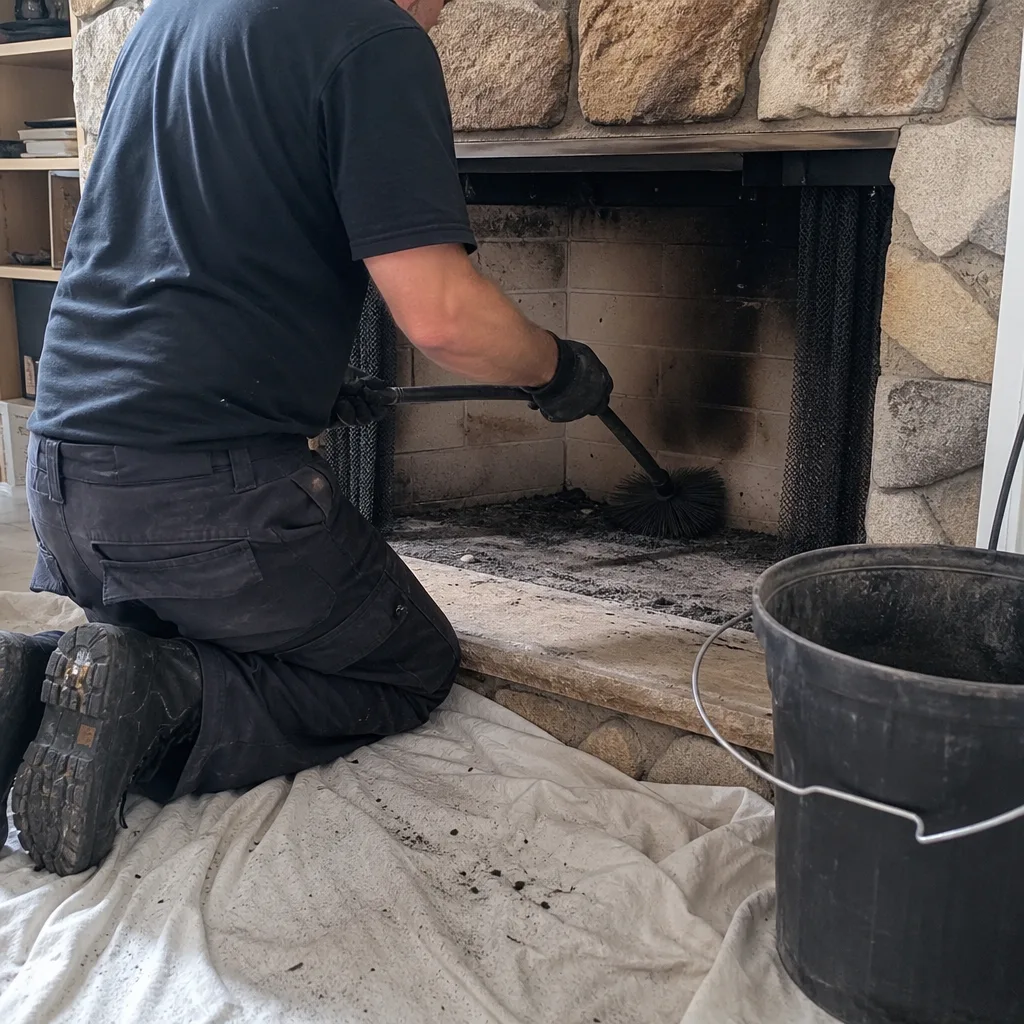
Chimney sweep logs do not sweep chimneys. They loosen some creosote - which then falls where a brush and vacuum still have to collect it.
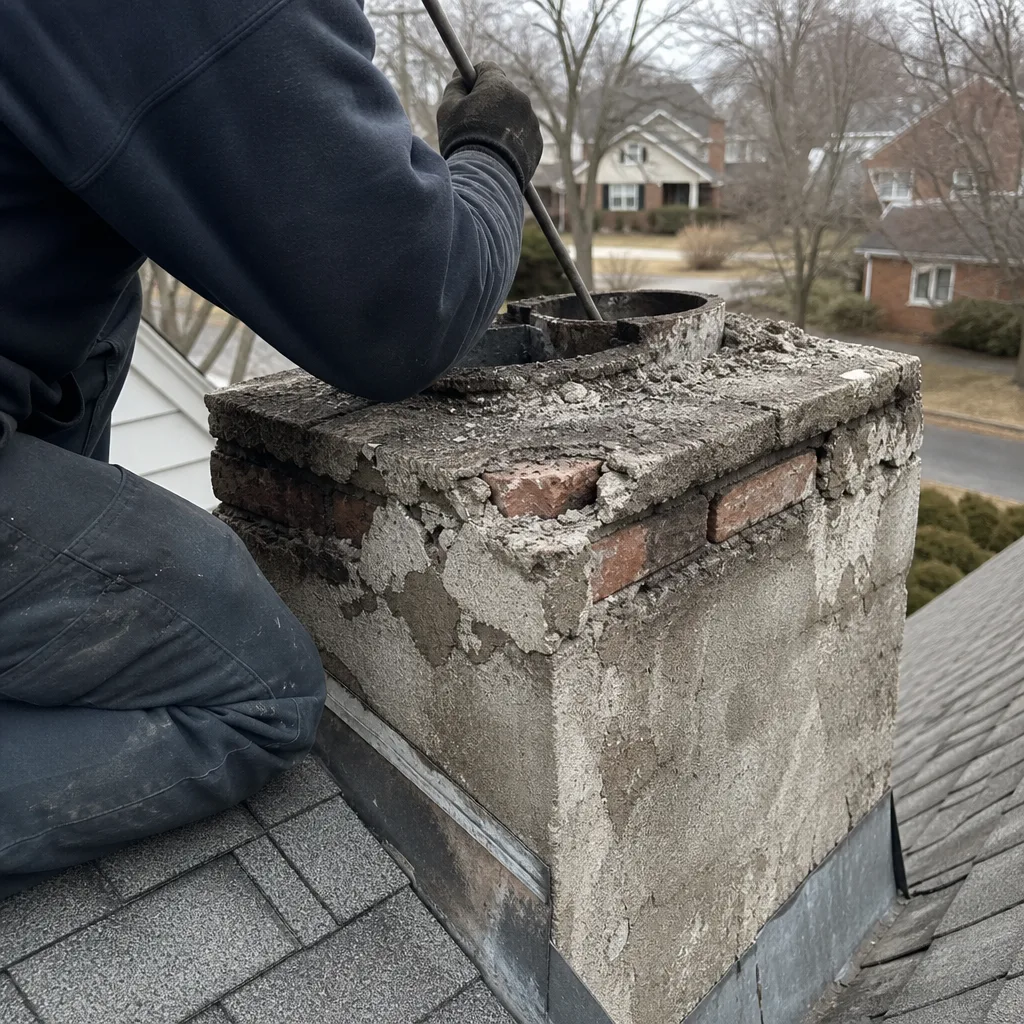 Before
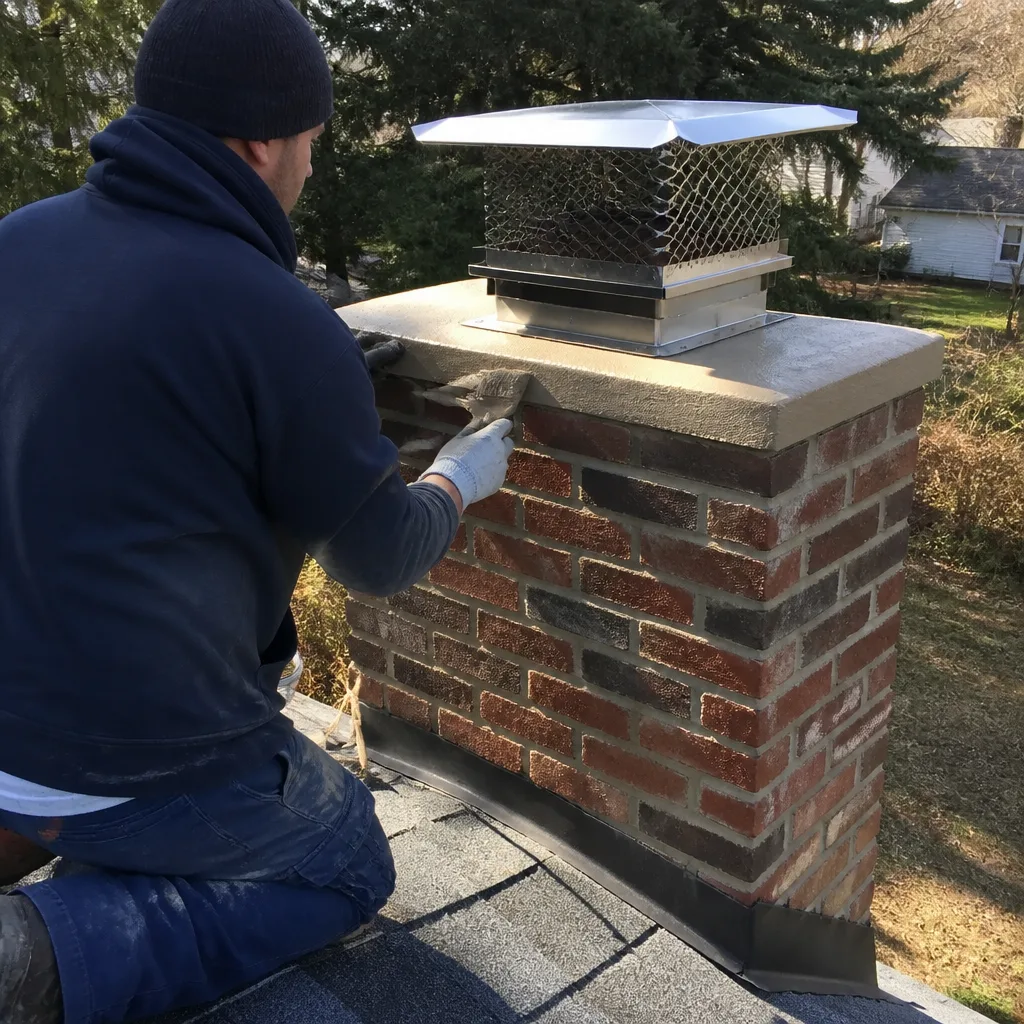 After
After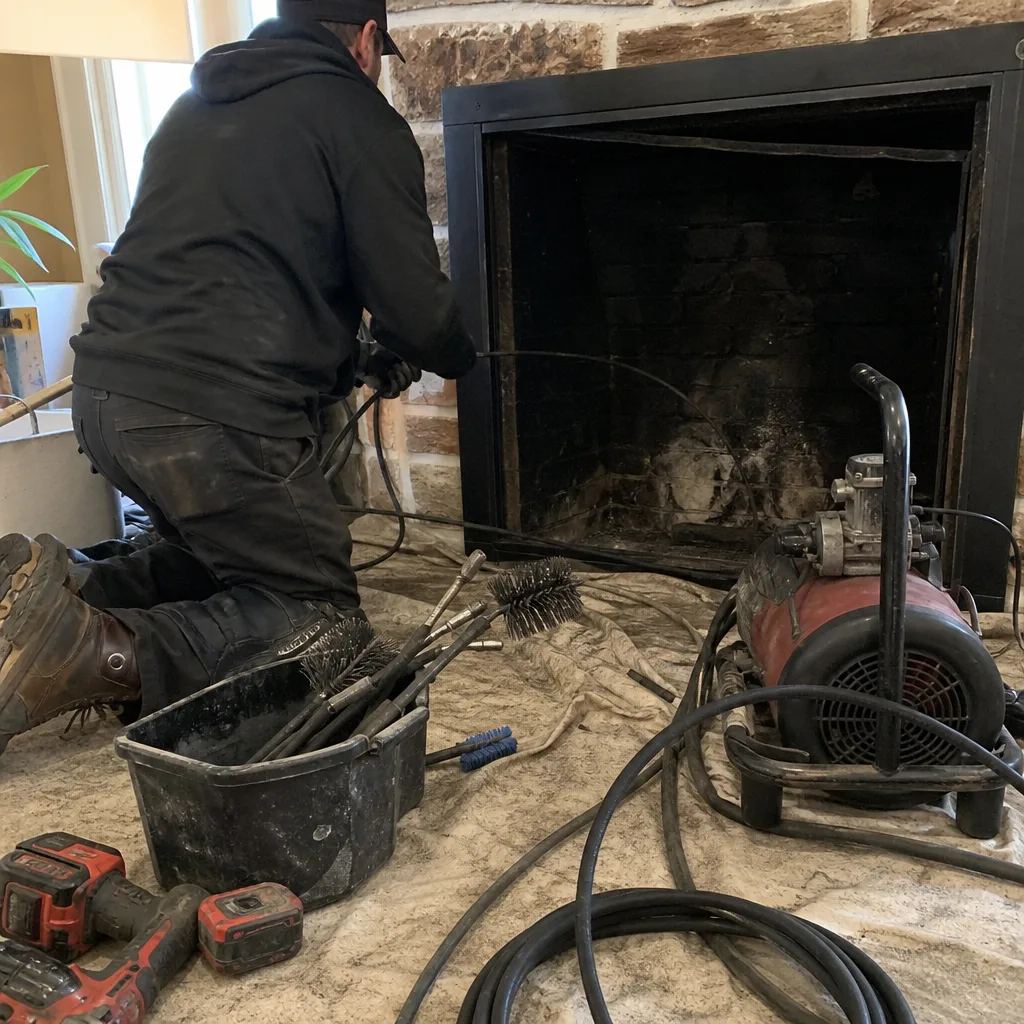 Before
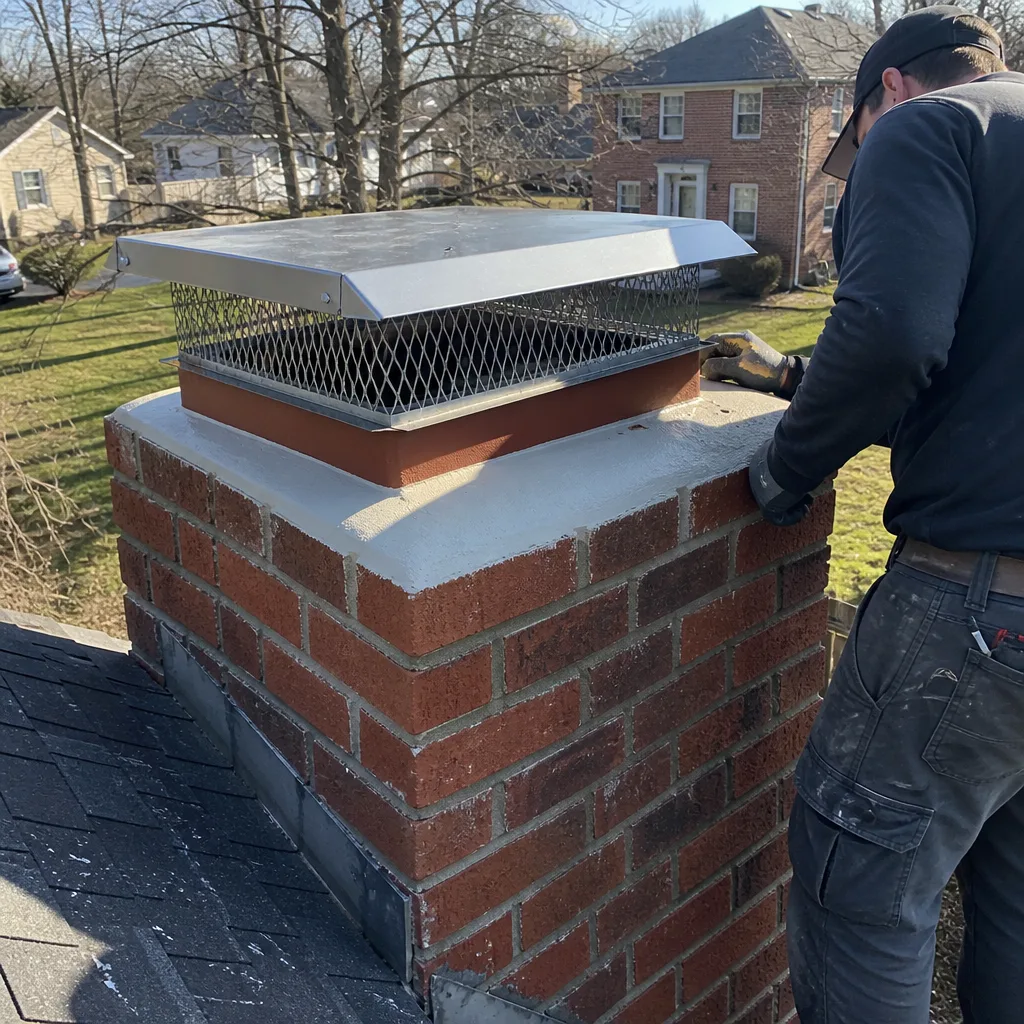 After
After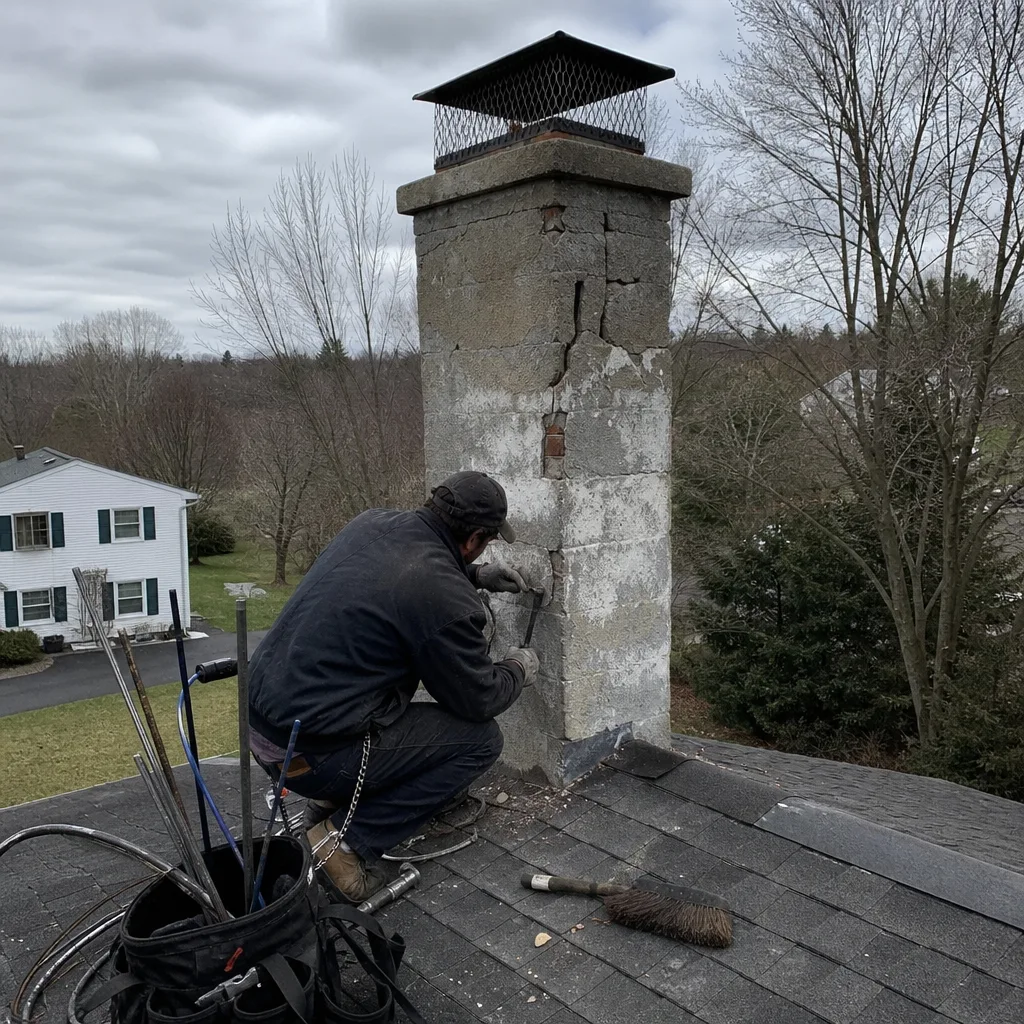 Before
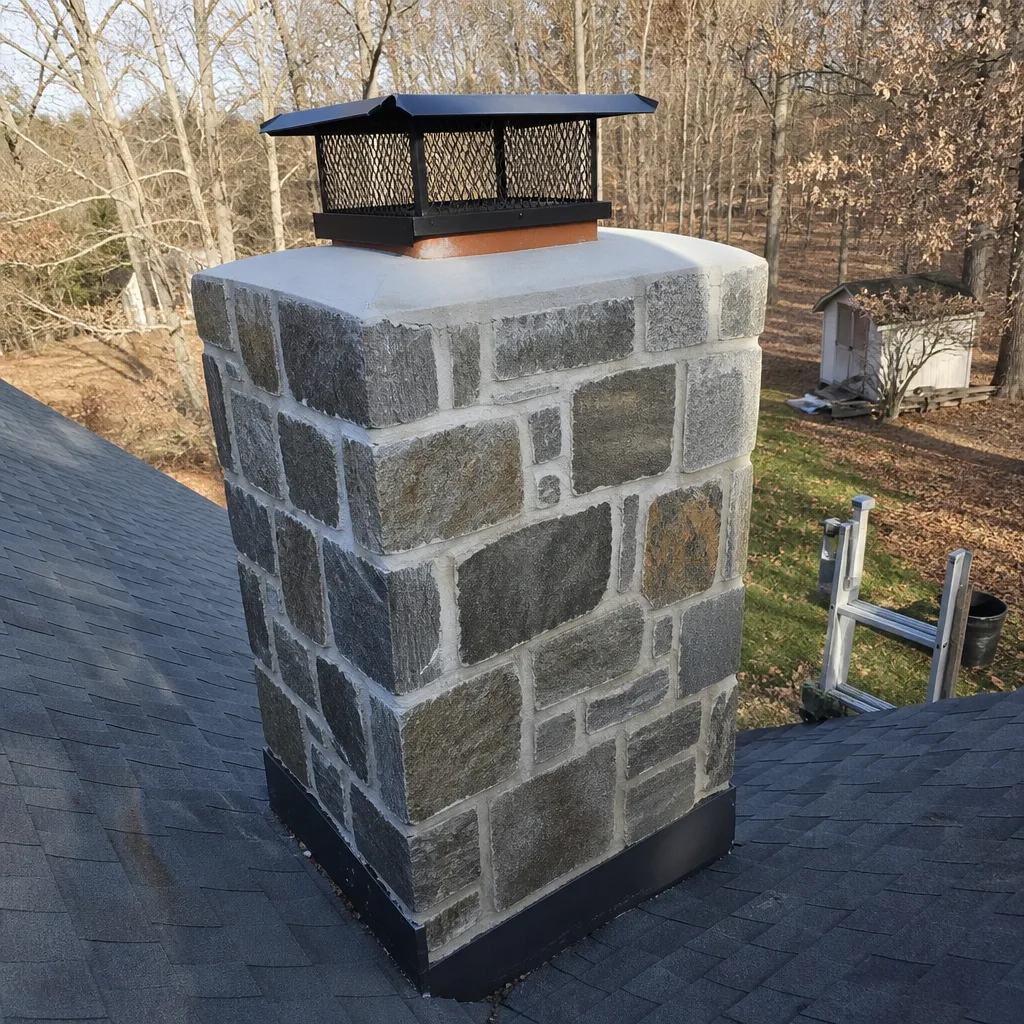 After
AfterChimney Cleaning & Sweep Maintenance Checklist for West Chester Homeowners
Most published chimney checklists ask you to verify that the damper “opens and closes” - a standard so vague it would pass a damper that’s 60% obstructed with fallen mortar. After inspecting more than 38,000 chimneys since 2009, we’ve learned that homeowners in West Chester need measurement criteria, not guesswork. Our Complete Guide to Chimney Cleaning in West Chester gives you the specific pass/fail thresholds for each checkpoint so you can evaluate your sweep’s work the same way a Level 2 inspector would. You’ll also learn which items require a camera to verify, how to document findings for warranty protection, and what the clay tile liner condition means in the pre-1980 housing stock common in West Chester’s older neighborhoods like the Historic District and Marshallton.
Quick Answer
A proper Chimney Cleaning & Sweep maintenance checklist for West Chester homeowners includes 14 measured checkpoints across structural, mechanical, and deposit conditions, with pass/fail criteria tied to NFPA 211 standards. A complete sweep runs $189-$329 in the West Chester market and must include a camera-scan inspection of the flue liner - visual-only checks from the firebox miss roughly 70% of liner damage. The checklist you receive should document creosote depth in 1/16-inch increments, damper gap measurements, and dated photos of every finding.
Table of Contents
- Why Most Chimney Checklists Fail Homeowners
- Pre-Inspection: What to Document Before the Sweep Arrives
- Firebox and Damper Checkpoints (Visual Verification)
- Flue Liner Checkpoints (Camera Verification Required)
- Crown, Cap, and Exterior Checkpoints
- Creosote Measurement and Classification
- West Chester-Specific Considerations for Older Homes
- Using Your Checklist as a Warranty Trigger
- Common Mistakes to Avoid
- When to Call a Professional
- Frequently Asked Questions
- The Bottom Line
 Before
 After
AfterWhy Most Chimney Checklists Fail Homeowners
The typical checklist you’ll find online lists items like “check damper” and “inspect flue” without stating what constitutes a pass. This creates a dangerous gap between what a homeowner believes was verified and what was actually found.
Here’s a concrete example. A damper that opens and closes but leaves a 3/8-inch gap when fully shut will leak enough conditioned air to cost a West Chester homeowner $180-$240 in extra heating and cooling over a typical winter. More critically, that gap can prevent proper draft during a fire, pushing smoke and carbon monoxide into the living space - one of the key Chimney Cleaning Warning Signs every West Chester homeowner should know. Yet a checklist that simply asks “damper operational? - yes/no” would mark this as passing.
The Haven Standard, which we’ve operated under since 2009, addresses this through Clause 4: every inspection produces a documented photo record with measured findings. But you don’t need to hire us to apply the same rigor. The checklist below uses the same thresholds our technicians apply during a Chimney Cleaning & Sweep in West Chester, broken into visual items you can confirm yourself and camera-required items where professional equipment is mandatory.
Three principles govern every checkpoint:
- Measurable over observable. “Looks fine” is not a finding. A measurement is.
- Photo or it didn’t happen. Every significant finding needs a dated image.
- Location-specific documentation. Damage in the smoke chamber versus the flue liner versus the crown carries different repair implications and costs.
Pre-Inspection: What to Document Before the Sweep Arrives
Before any technician touches your chimney, establish a baseline. This protects you if a dispute arises about whether damage was pre-existing or caused during service. In West Chester, where many homes in the Gay Street corridor and surrounding boroughs date to the 1920s-1950s, pre-existing masonry cracks are common and often misattributed.
Complete this documentation the day before your appointment:
- Photograph the firebox from three angles: straight on, from the hearth looking up, and from the side showing the junction of firebox back wall and smoke chamber. Date-stamp each image.
- Record the last cleaning date and frequency of use. A fireplace used 3+ times weekly accumulates creosote roughly 2.5x faster than one used for “ambiance” fires twice monthly.
- Note any performance changes: slower draft, smoke spillage, unusual odors, or debris falling into the firebox. Write these down; memory degrades details within 48 hours.
- Document exterior condition: crown cracks, missing cap, or vegetation growth. Use a phone photo from ground level - do not climb onto the roof.
- Verify your sweep’s scope in writing. Under Haven Standard Clause 1, we deliver a written price, written scope, and written warranty before work begins. Any sweep who won’t commit to scope in writing is operating below the standard you should accept.
Store these baseline photos in a dedicated folder. When the sweep completes work, compare their documented findings against your baseline. For additional help, see our more guides & resources. Discrepancies should be explained before you sign anything.
Firebox and Damper Checkpoints (Visual Verification)
These five checkpoints can be verified from the firebox opening without specialized equipment. A flashlight and tape measure are sufficient.
Checkpoint 1: Damper Plate Gap
Pass criterion: Zero visible light gap when damper is fully closed, measured with flashlight off and room lights dimmed. Tolerance: 1/16 inch maximum at any point.
Fail: Any gap exceeding 1/16 inch, or visible warping/corrosion holes in the plate.
What it means: Gaps larger than 1/8 inch typically require damper replacement ($340-$580 in West Chester) rather than adjustment. HeatShield refractory mortar can sometimes seal smaller gaps if the plate itself is sound.
Checkpoint 2: Firebox Refractory Panel Condition
Pass criterion: No cracks wider than 1/8 inch, no spalling (surface flaking) exceeding 1/4 inch depth, no missing sections.
Fail: Through-cracks (visible light through the panel), cracks wider than 1/8 inch, or spalling deeper than 1/4 inch.
What it means: Factory-built fireplace panels are replaceable; cracked panels in a masonry firebox require refractory mortar repair or partial rebuild. In West Chester, we’ve replaced panels in homes near West Chester University where decades of thermal cycling degraded the refractory surface.
Checkpoint 3: Smoke Chamber Slope and Parging
Pass criterion: Smooth, sloped walls directing flow into the flue; no exposed corbelled brick edges; parging (smooth coating) intact with no gaps exceeding 2 inches.
Fail: Corbelled brick edges exposed, reverse slope creating a shelf, or parging loss exceeding 25% of surface area.
What it means: The smoke chamber is the transition zone above the damper. Poor geometry here causes turbulence that deposits creosote and reduces draft. NFPA 211 requires parging to correct corbelled construction, common in pre-1960 West Chester homes.
Checkpoint 4: Hearth Extension Dimensions
Pass criterion: Hearth extends 16 inches in front of firebox opening and 8 inches to each side for fireplaces 6 square feet or smaller; 20 inches front and 12 inches sides for larger openings.
Fail: Any dimension below these minimums.
What it means: Undersized hearths are a leading cause of floor joist charring. In West Chester’s Victorian-era homes, original hearths often don’t meet modern clearances - they’re grandfathered only if unchanged, but any modification triggers current code compliance.
Checkpoint 5: Ash Dump and Cleanout Door
Pass criterion: Ash dump (if present) operates smoothly; cleanout door in basement or exterior wall seals tightly with intact gasket; no ash accumulation blocking the dump.
Fail: Rusted shut dump, missing or ill-fitting cleanout door, or ash buildup indicating the dump hasn’t been cleared in multiple seasons.
What it means: Ash dumps in West Chester’s older homes often corrode closed from moisture intrusion. Forcing them open can damage the firebox floor. We document these with photos before attempting operation.
Flue Liner Checkpoints (Camera Verification Required)
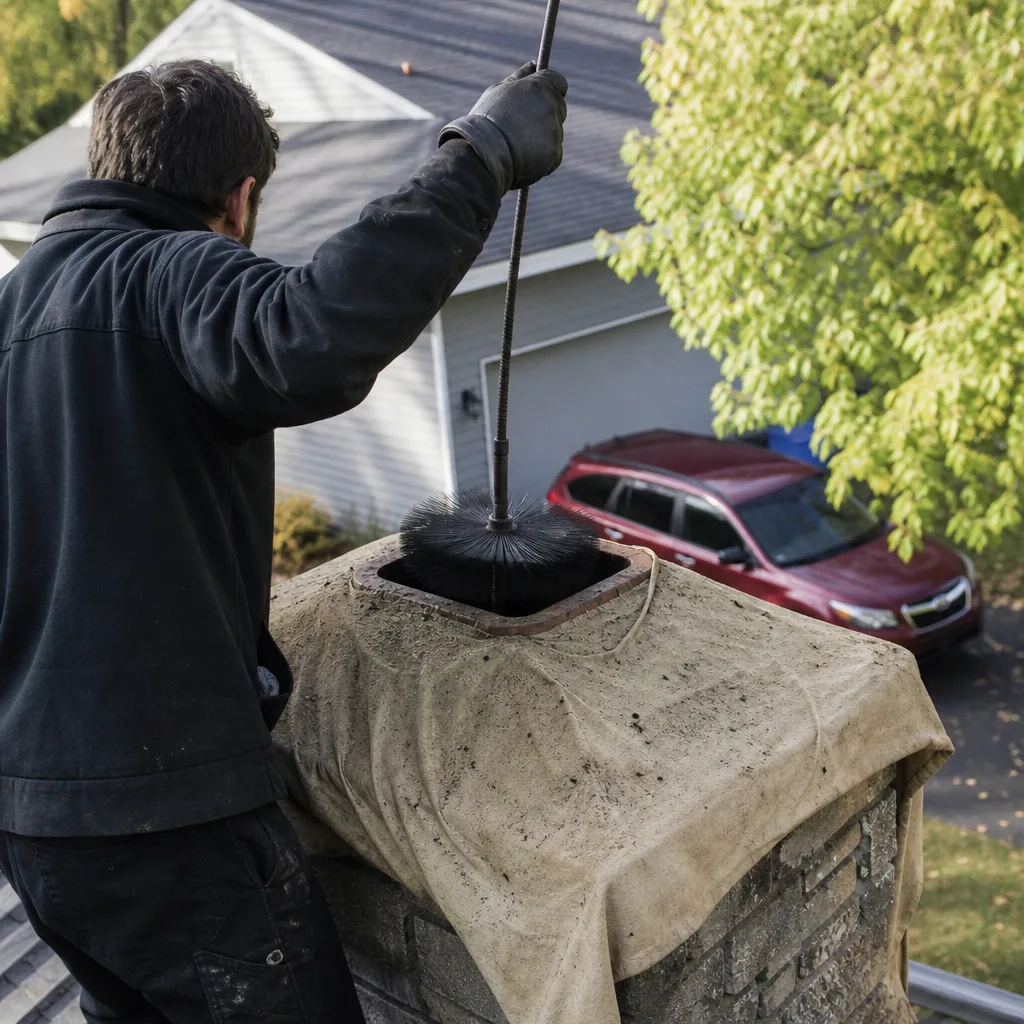
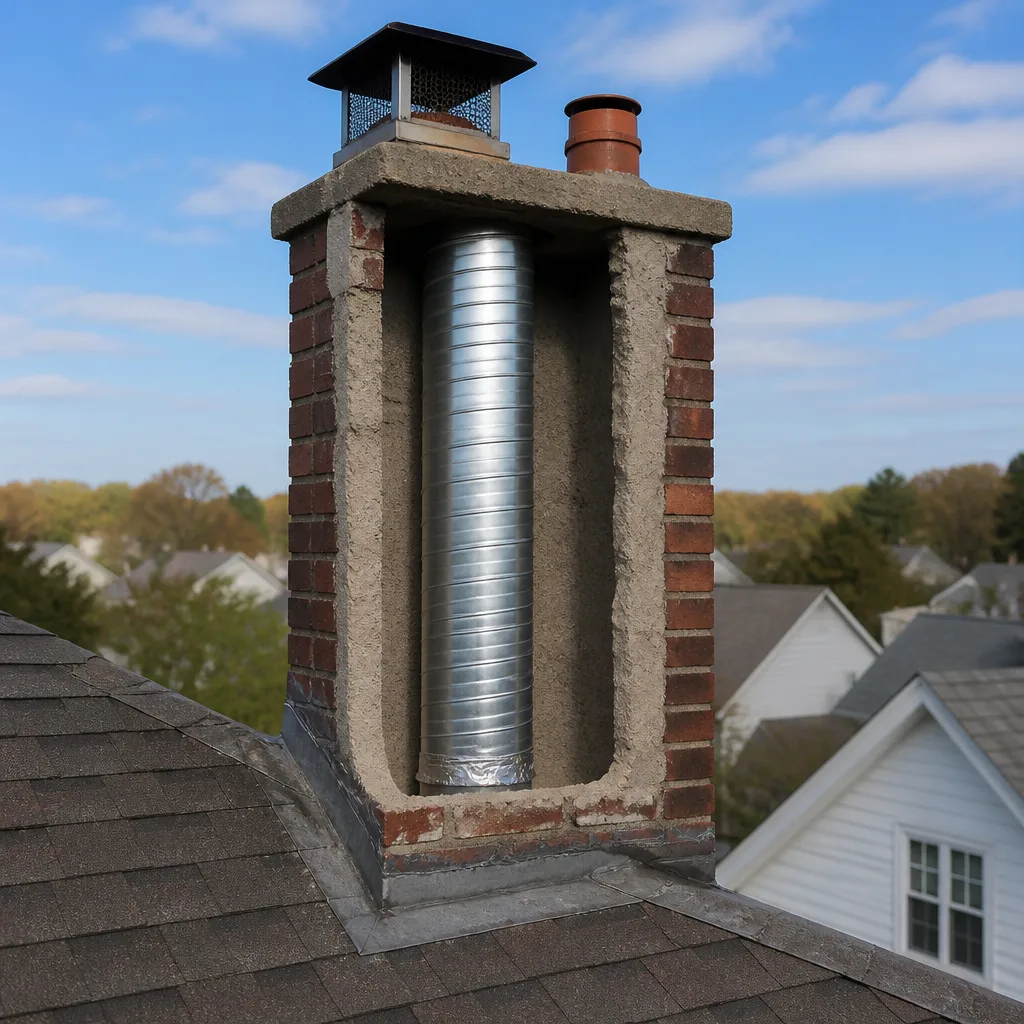
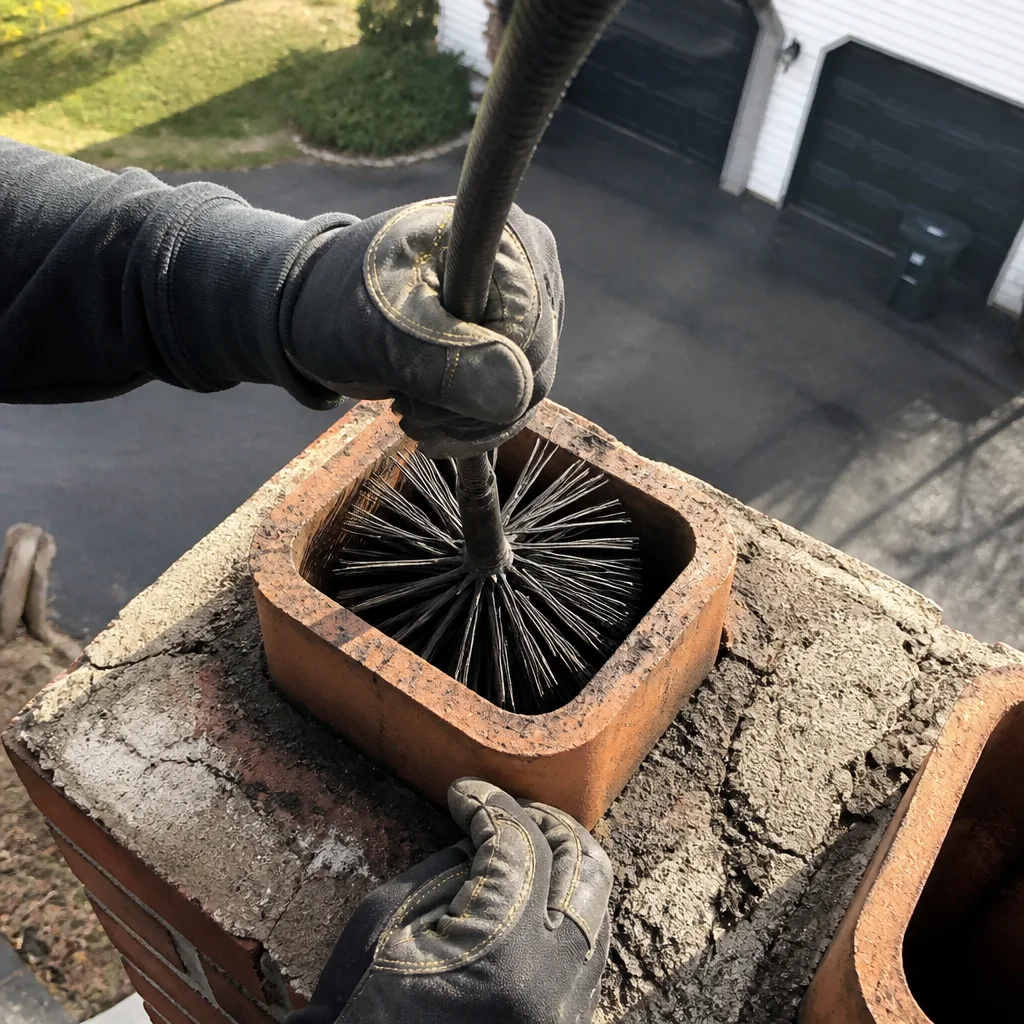
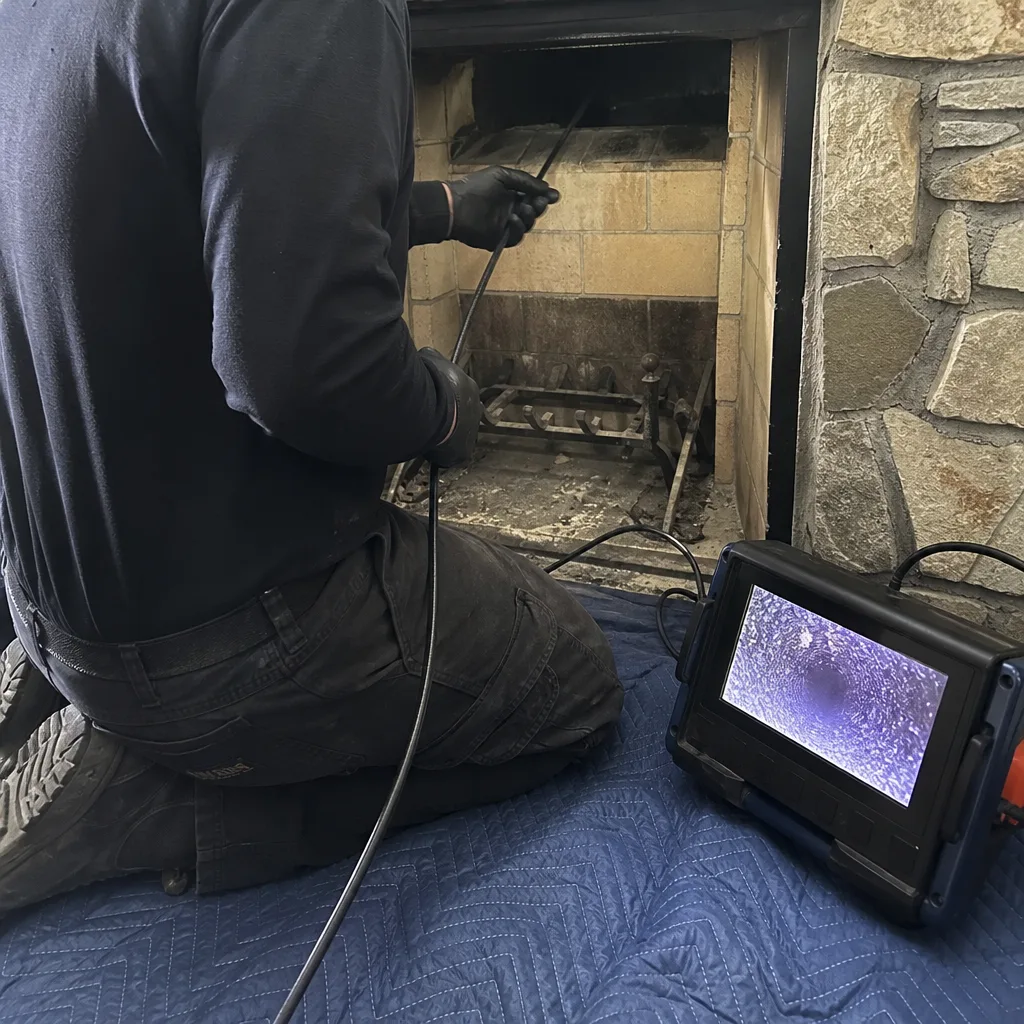
These checkpoints cannot be verified visually from the firebox. A chimney camera - specifically a high-resolution unit with 90-degree articulation and LED lighting - must scan the full flue length. Flashlight-and-mirror methods miss approximately 70% of liner damage, particularly in the upper third where thermal stress concentrates.
Our Chimney Repair in West Chester service regularly addresses liner damage that previous “visual inspections” failed to catch. The camera scan is non-negotiable for these items:
Checkpoint 6: Clay Tile Liner Crack Width and Pattern
Pass criterion: No cracks wider than 1/16 inch; no cracks extending through the tile wall; no missing tile segments.
Fail: Cracks exceeding 1/16 inch, through-wall cracks, or spalling with substrate exposure.
What it means: Hairline cracks (under 1/16 inch) in clay tile are common and monitorable. Wider cracks allow flue gases to reach surrounding masonry, accelerating deterioration and creating carbon monoxide pathways. In West Chester’s freeze-thaw climate, water infiltration through cracks expands damage by 200-400% annually.
Critical distinction: Vertical cracks (top to bottom) typically indicate thermal shock from chimney fire or rapid temperature change. Horizontal or stair-step cracks suggest structural settlement, common in West Chester’s clay-soil areas where seasonal moisture fluctuation stresses foundations.
Checkpoint 7: Liner Joint Alignment and Mortar Loss
Pass criterion: Joints aligned within 1/4 inch; mortar present at all joints with no gaps exceeding 1/8 inch.
Fail: Offset joints exceeding 1/4 inch (creates creosote ledges), or mortar loss exposing the joint cavity.
What it means: Misaligned joints trap creosote and restrict cleaning tool passage. In West Chester, we’ve found joint offsets up to 1.5 inches in 1920s construction where settling shifted the chimney stack. These require relining rather than spot repair.
Checkpoint 8: Flue Obstruction and Nesting
Pass criterion: Full flue diameter clear; no debris, nests, or animal intrusion; no glaze creosote reducing diameter by more than 1/8 inch.
Fail: Any obstruction, active nest, or glaze creosote buildup exceeding 1/8 inch thickness.
What it means: Squirrel and raccoon intrusion peaks in West Chester during October-November as temperatures drop. A camera scan identifies nesting material before it ignites. Glaze creosote (Class III, described below) requires chemical treatment - mechanical brushing alone won’t remove it.
Checkpoint 9: Liner-to-Appliance Connection
Pass criterion: Visible, secure connection at the flue collar; no gaps exceeding 1/8 inch; proper liner sizing per appliance BTU rating.
Fail: Disconnected or deteriorated connection, oversize liner (causes condensation and poor draft), or undersize liner (over-fires the appliance).
What it means: Insert stoves connected to oversize masonry flues are a common West Chester issue. The 8-inch round flue serving a 30,000 BTU insert operates below minimum velocity, causing creosote condensation in the upper flue where the camera - but not a visual check - reveals it.
Crown, Cap, and Exterior Checkpoints
Exterior checkpoints require roof access. For safety, we recommend professional evaluation rather than homeowner inspection. However, you can verify that your sweep’s documentation includes these specific measurements.
Checkpoint 10: Crown Integrity and Slope
Pass criterion: Crown slopes minimum 1/4 inch per foot away from flue opening; no cracks wider than 1/8 inch; no spalling or exposed aggregate; overhangs masonry wall by minimum 2 inches.
Fail: Flat or reverse-sloped crown (pools water), cracks exceeding 1/8 inch, or deterioration exposing the pour matrix.
What it means: Crown cracks in West Chester’s climate typically propagate through freeze-thaw cycles within 2-3 winters. A cracked crown channels water directly into the chimney structure, causing the liner damage described above. Crown rebuild using CrownCoat or similar refractory cement runs $480-$890; full crown replacement with proper drip edge and slope runs $1,200-$2,100.
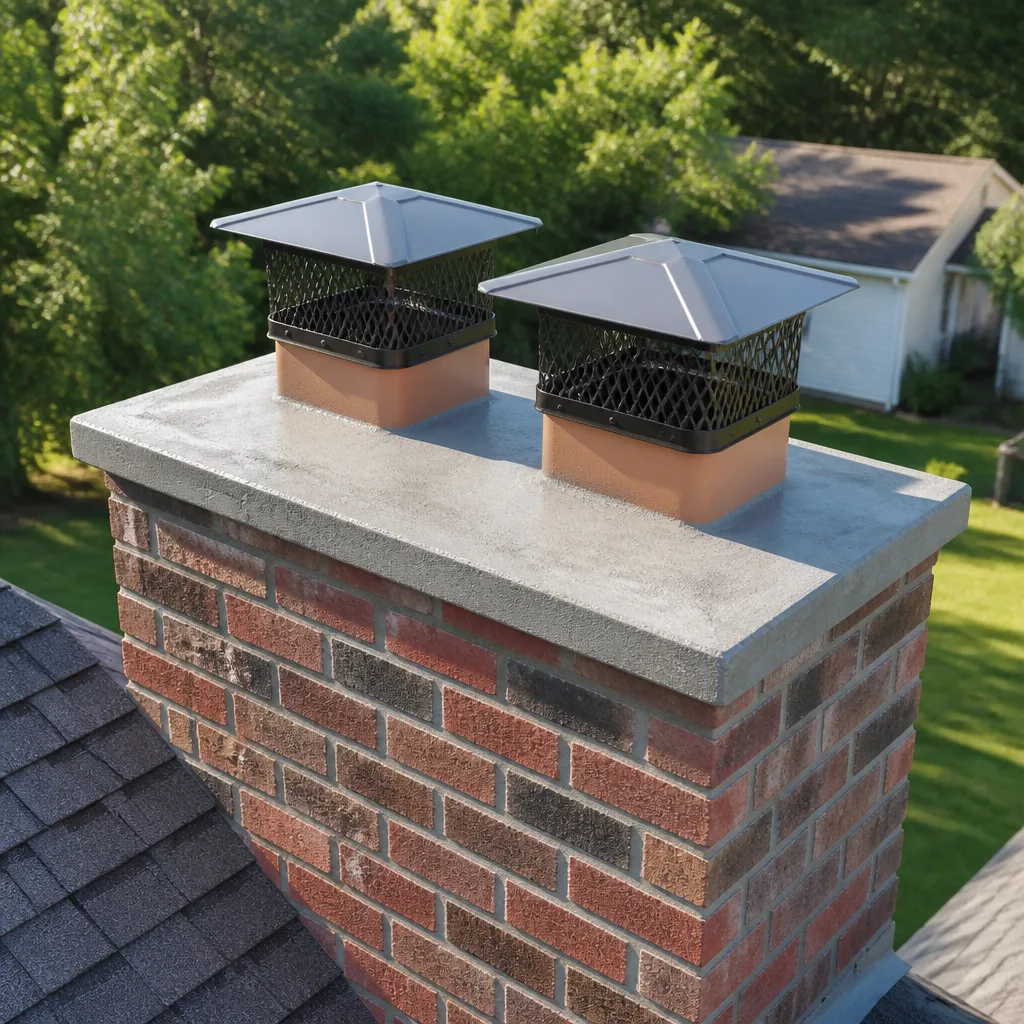
Checkpoint 11: Cap Condition and Mesh Specification
Pass criterion: Cap covers full flue opening with minimum 5/8-inch mesh (spark arrestor); no rust-through; secure attachment; minimum 5-inch clearance between cap lid and flue tile.
Fail: Missing cap, mesh larger than 3/4 inch (allows animal entry), rusted attachment points, or insufficient clearance (restricts draft).
What it means: Caps from Famco and Gelco with 304 stainless construction carry 15-20 year warranties in our experience. Galvanized caps in West Chester’s humid summers typically fail in 5-7 years. We document cap manufacturer and install date when visible.
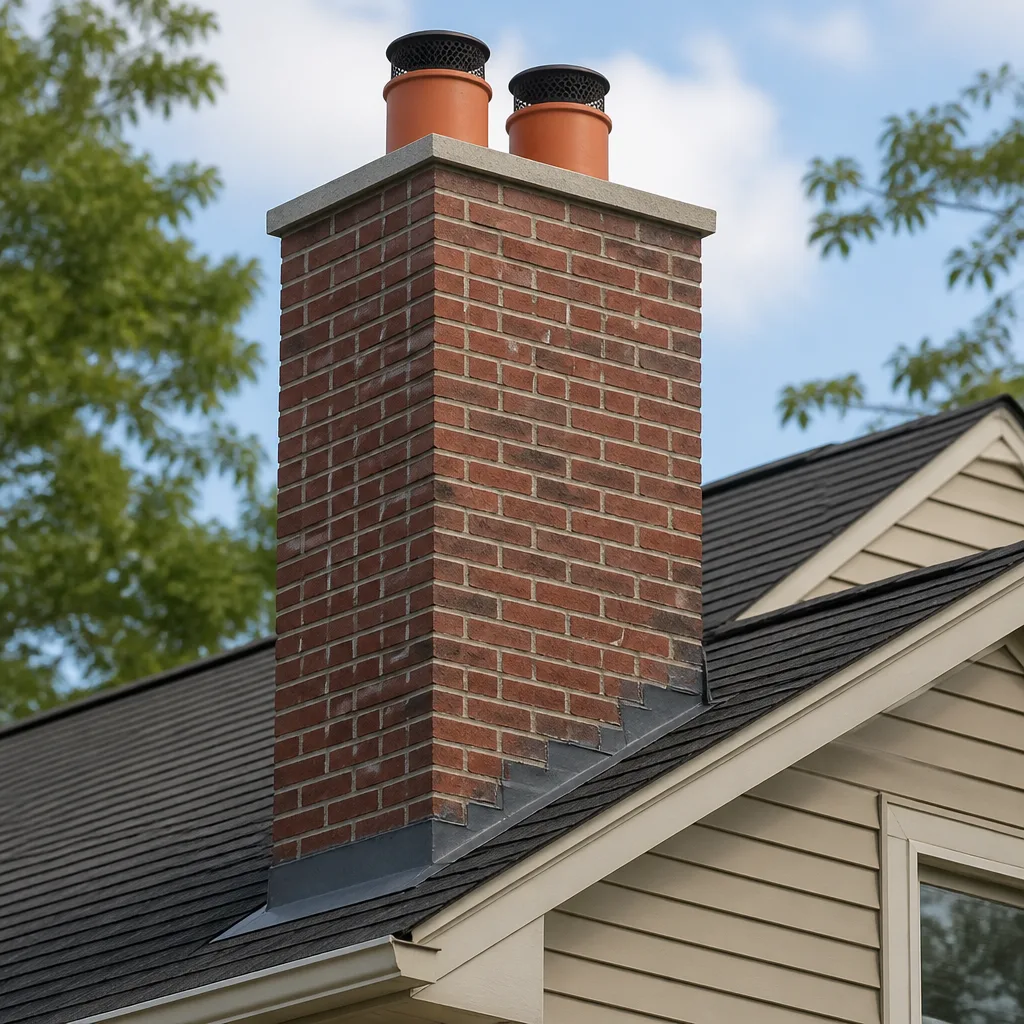
Checkpoint 12: Flashing and Counter-Flashing
Pass criterion: Step flashing integrated with shingles; counter-flashing embedded in masonry joint with visible sealant bead; no gaps or lifting.
Fail: Lifted flashing, separated counter-flashing, or sealant failure at masonry joint.
What it means: Flashing leaks are the most misdiagnosed chimney issue. Water staining on interior walls near the chimney often triggers unnecessary crown or liner work when the actual failure is a $280-$450 flashing repair. Camera inspection of the interior chimney wall near the roofline confirms or rules out this diagnosis.
Creosote Measurement and Classification
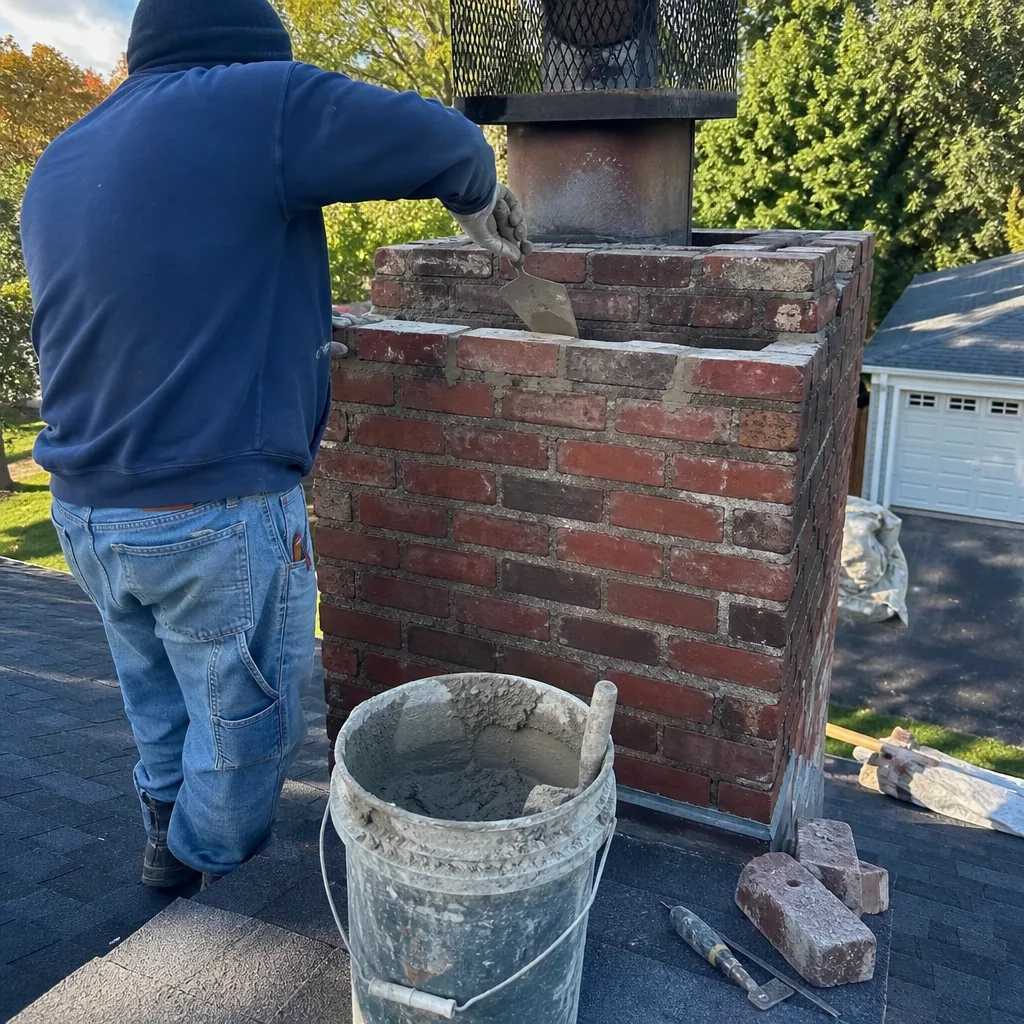
Creosote reporting without classification and depth measurement is meaningless. “Needs cleaning” tells you nothing about risk level or required method.
NFPA 211 recognizes three creosote classes. Your checklist should specify which was found, at what depth, and at what flue locations:
| Class | Appearance | Depth Threshold for Action | Removal Method |
|---|---|---|---|
| I (Soot) | Black, powdery, easily brushed | 1/8 inch or more | Standard wire brush |
| II (Granular) | Crunchy, popcorn-like flakes | 1/8 inch or more | Poly or flat wire brush; may require chains |
| III (Glaze) | Shiny, tar-like, hard crust | 1/16 inch or more | Chemical treatment + mechanical removal; often requires multiple visits |
Measurement protocol: Depth should be recorded at three points per flue section - bottom third, middle third, top third - using a creosote gauge or calibrated probe. A single reading is insufficient; creosote deposits unevenly, with maximum accumulation typically 12-24 inches above the smoke chamber entrance where gas velocity drops.
In West Chester, Class III glaze creosote is most common in fireplaces burned with inadequate air supply (dampered down for overnight burn) or with unseasoned wood. The moisture content of properly seasoned wood should be below 20%; we recommend 15-18% for our climate. Local suppliers like those serving the Brandywine Valley area typically stock hardwoods at acceptable moisture levels by late summer.
Your checklist should state: “Class [I/II/III] creosote, maximum depth [X]/16 inch, located at [specific flue station].” Anything less is incomplete documentation.
West Chester-Specific Considerations for Older Homes
West Chester’s housing stock presents distinct chimney profiles that generic checklists ignore. Understanding these helps you interpret findings and evaluate repair recommendations.
Pre-1980 Clay Tile Construction
Homes built before 1980 in West Chester’s borough and immediate surrounding areas - including neighborhoods like West Goshen, East Bradford, and Thornbury - predominantly use 8×8 or 8×12 clay flue tile liners in unlined masonry chimneys. These tiles were installed with lime-based mortar that degrades faster than modern Portland cement formulations.
Specific failure patterns we document:
- Smoke chamber erosion: Lime mortar in corbelled smoke chambers washes out in 40-60 years, exposing brick ledges that trap creosote. This is nearly universal in 1940s-1960s West Chester construction.
- Tile spalling from freeze-thaw: Water enters through crown cracks, saturates the tile, and surface flakes during winter freeze cycles. Spalling depth of 1/4 inch or more indicates active water intrusion requiring crown repair plus liner evaluation.
- Settlement-induced joint offset: West Chester’s expansive clay soils cause differential settlement. We’ve measured 3/8-inch joint offsets in 50-year-old chimneys that appeared plumb from the exterior.
Post-1980 Transitional Construction
Homes from 1980-2000 often have clay tile liners with poured refractory crowns - an improvement, but crowns from this era frequently lack proper expansion joints and crack predictably at 15-20 years. If your West Chester home falls in this range, crown condition should be checked every 3 years regardless of other findings.
Modern Construction (2000-Present)
Newer West Chester developments like those in Westtown or along Route 3 increasingly use stainless steel liner systems from DuraFlex or equivalent, often in factory-built chimney enclosures. These require different inspection criteria: joint seam integrity, proper termination height (3 feet above roof penetration, 2 feet above any point within 10 feet), and corrosion indicators at the cap.
Local Climate Factor
West Chester averages 42 inches of annual precipitation with 25-30 freeze-thaw cycles per winter. This combination accelerates masonry deterioration compared to drier or more consistently cold climates. Our inspection frequency recommendation: annual for fireplaces used weekly, biennial for occasional use, and immediately after any chimney fire event (indicated by puffy, expanded creosote or discored flue tiles).
Using Your Checklist as a Warranty Trigger
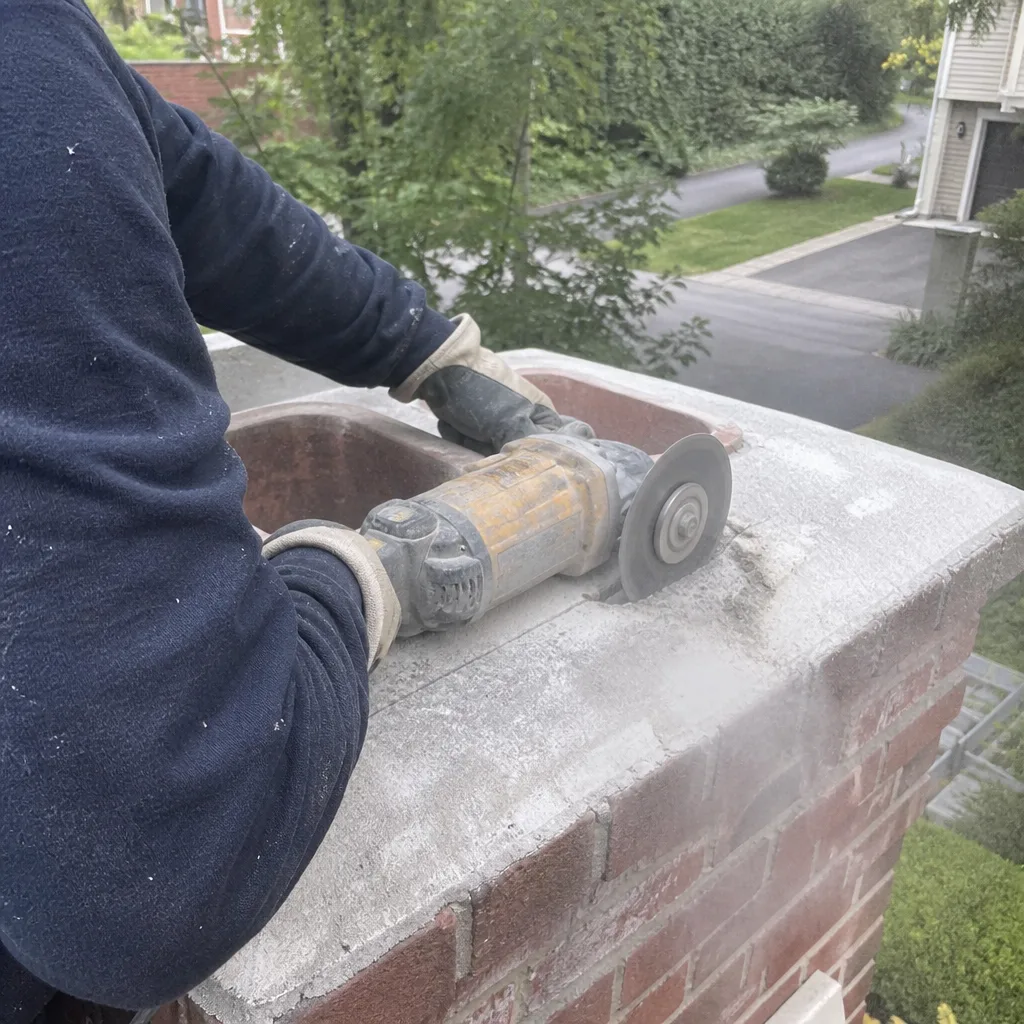
A documented checklist is not merely a record - it’s a contractual tool. Understanding what findings create repair obligation versus what omissions let a contractor walk away protects you from disputes.
Findings That Trigger Contractor Obligation
If your sweep identifies any of the following and you proceed with recommended repair, the original documentation creates a baseline for warranty claims:
- Measured crack widths: A crack documented at 1/8 inch that widens to 3/16 inch within 12 months indicates progressive failure, typically covered under workmanship warranty if the repair was appropriate for the initial finding.
- Creosote classification and depth: Class III creosote documented at 3/16 inch that returns to the same depth within one burning season may indicate improper removal technique or underlying combustion issues the sweep failed to address.
- Liner condition with photo: A liner photo showing intact tile that subsequently fails within the warranty period (typically 1-5 years depending on repair type) supports a claim that the failure was latent and pre-existing, not caused by subsequent use.
Omissions That Let Contractors Walk Away
Conversely, if these items are not documented, you have limited recourse:
- No photo of pre-existing damage: Without dated images, a contractor can claim crown cracks or liner damage existed before their work.
- No measurement, only observation: “Crown has some cracks” is not a finding. “Crown crack: 3/16 inch, located at northwest quadrant, 8 inches from flue tile” is.
- No scope in writing before work: Haven Standard Clause 1 exists because verbal scope agreements are unenforceable. If your sweep won’t put the work description and price in writing before starting, you’re accepting unlimited liability for “while we’re in there” additions.
Before/After Photo Log Template
Retain your own proof independent of the company’s file. Create a folder with this structure:
- YYYY-MM-DD_Pre-Inspection/ - Your baseline photos (firebox angles, exterior, any known issues)
- YYYY-MM-DD_Sweep-Report/ - Copy of the sweep’s checklist, their photos, and written scope
- YYYY-MM-DD_Post-Repair/ - Photos of completed work, dated, with visible measurements where applicable
Store these in cloud backup. Companies consolidate, close, or lose records. Your documentation persists.
Common Mistakes to Avoid
- Accepting a “cleaning” without inspection. A sweep that doesn’t produce a checklist with measured findings is selling labor, not service. In West Chester, we’ve seen chimneys “cleaned” annually for a decade while liner damage progressed to the point of requiring $4,000+ relining.
- Confusing a Level 1 and Level 2 inspection. Level 1 is visual, from accessible areas, without tools. Level 2 requires camera scan of the flue interior. If your sweep claims to have “inspected” the liner but used no camera, you received Level 1 scope at best. Our Level Two Chimney West Chester home page explains the distinction in detail.
- Ignoring the smoke chamber. This hidden transition zone above the damper is where most chimney fires start. It’s invisible without a mirror or camera from the firebox, and inaccessible from the roof. A checklist that doesn’t address smoke chamber condition is incomplete.
- Assuming new construction means no problems. We’ve found missing flue liners, disconnected appliance collars, and improperly sloped crowns in West Chester homes less than 5 years old. Builder inspections rarely include camera verification.
- Delaying action on Class III creosote. Glaze creosote ignites at approximately 450°F - a temperature reached in normal fireplace operation. Unlike Class I soot, it doesn’t require abnormal conditions to ignite. Chemical treatment takes 1-2 weeks; don’t schedule the “removal” appointment before the treatment has worked.
- Accepting verbal estimates for significant repair. Any repair exceeding $500 should have written scope, written price, and written warranty before work begins. This is Haven Standard Clause 1, and it’s how we operate on every job - but it’s also a standard you should demand from any provider.
When to Call a Professional
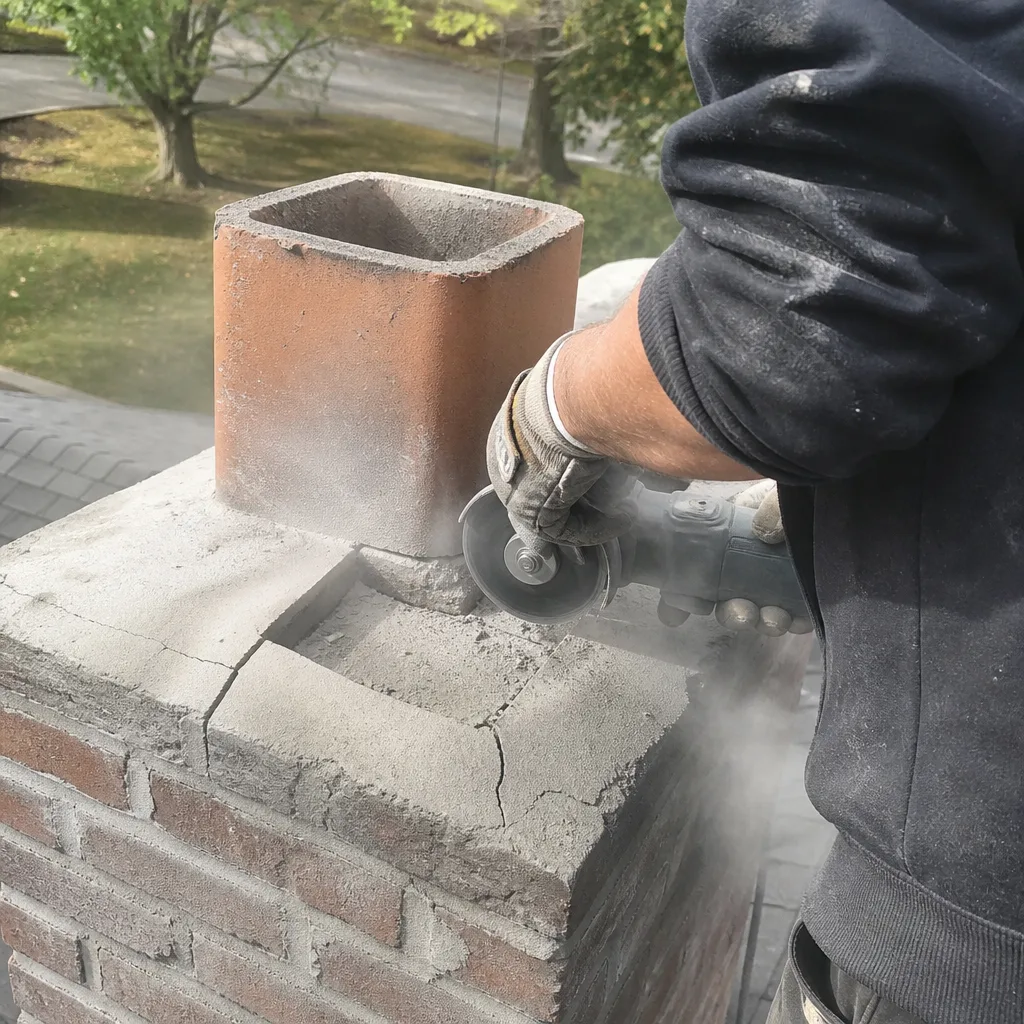
Call for professional evaluation if your checklist reveals any of the following: cracks in clay tile liner exceeding 1/16 inch, any separation between liner segments, Class III creosote at any depth, a crown that channels water toward the flue, or smoke spillage into the room during normal operation. These conditions create fire or carbon monoxide hazards that require corrected before the fireplace is used again.
For West Chester homeowners, Fireplace Services in West Chester from Level Two Chimney West Chester include the full camera-scan inspection, measured checklist, and written scope before any work begins. We offer free estimates - call (610) 321-4570 to schedule. Our technicians are background-checked, uniformed, and you’ll receive a text when yours is en route with name and photo.
Frequently Asked Questions
A complete chimney cleaning and Level 2 inspection in West Chester typically runs $189-$329, depending on flue configuration, accessibility, and creosote class. Class III glaze creosote adds $150-$280 for chemical pretreatment. We deliver a written price before any work starts - no exceptions. Call (610) 321-4570 for an exact quote; estimates are free.
NFPA 211 recommends annual inspection for all chimney systems, with cleaning frequency determined by creosote accumulation rather than calendar. In practice, West Chester homeowners who burn 2+ times weekly during heating season need annual cleaning; occasional users can extend to biennial if the prior inspection showed minimal accumulation. Our climate’s freeze-thaw cycles make annual structural inspection prudent regardless of use frequency.
Clay tile liners are serviceable if intact - no cracks, aligned joints, and proper appliance sizing. Replacement becomes necessary when cracks exceed 1/16 inch, tiles are missing or spalled through-wall, or the liner is oversize for a modern insert (causing condensation and poor draft). We document liner condition with camera footage and explain whether damage is monitorable or requires immediate action. No liner replacement is recommended without photo evidence you can review yourself.
Skipped maintenance leads to three predictable outcomes: creosote accumulation to ignitable depth (chimney fire risk), undetected liner damage allowing flue gas leakage into wall cavities (carbon monoxide risk), and water intrusion degrading masonry structure (cost escalation from $400 crown repair to $6,000+ rebuild). The progression is gradual over 3-5 years, then accelerates dramatically. Annual inspection catches deterioration at the repairable stage.
Firebox and damper checkpoints are safely verifiable by homeowners with a flashlight and tape measure. Flue liner inspection requires specialized camera equipment and roof access that we don’t recommend for DIY - the risk of incomplete evaluation (false confidence) exceeds the benefit. Exterior checkpoint documentation from ground level is useful baseline data; roof-level inspection should be left to professionals with proper fall protection.
A sweep removes combustible deposits. An inspection evaluates system condition. They are distinct services, though they’re often performed together. A sweep without inspection tells you nothing about liner integrity, crown condition, or structural soundness. Our standard visit includes both, with the camera-scan inspection and documented photo record included as standard under Haven Standard Clause 4 - not an optional add-on.
The Bottom Line
A chimney checklist without measured pass/fail criteria is a liability, not a tool. West Chester homeowners in older housing stock face specific risks - clay tile degradation, lime mortar erosion, and freeze-thaw masonry damage - that generic checklists don’t address. Demand documented measurements in 1/16-inch increments, dated photos of every significant finding, and a written scope before any work begins. Retain your own photo record independent of the contractor’s file. The 14 checkpoints in this guide, verified with camera inspection where required, give you the same evaluation standard our technicians apply across 38,000+ chimneys. The cost of thorough documentation is included in a proper sweep; the cost of its absence is measured in hazards discovered too late.
Written by Corrine Halstead, Owner at Level Two Chimney West Chester, serving West Chester since 2009.